
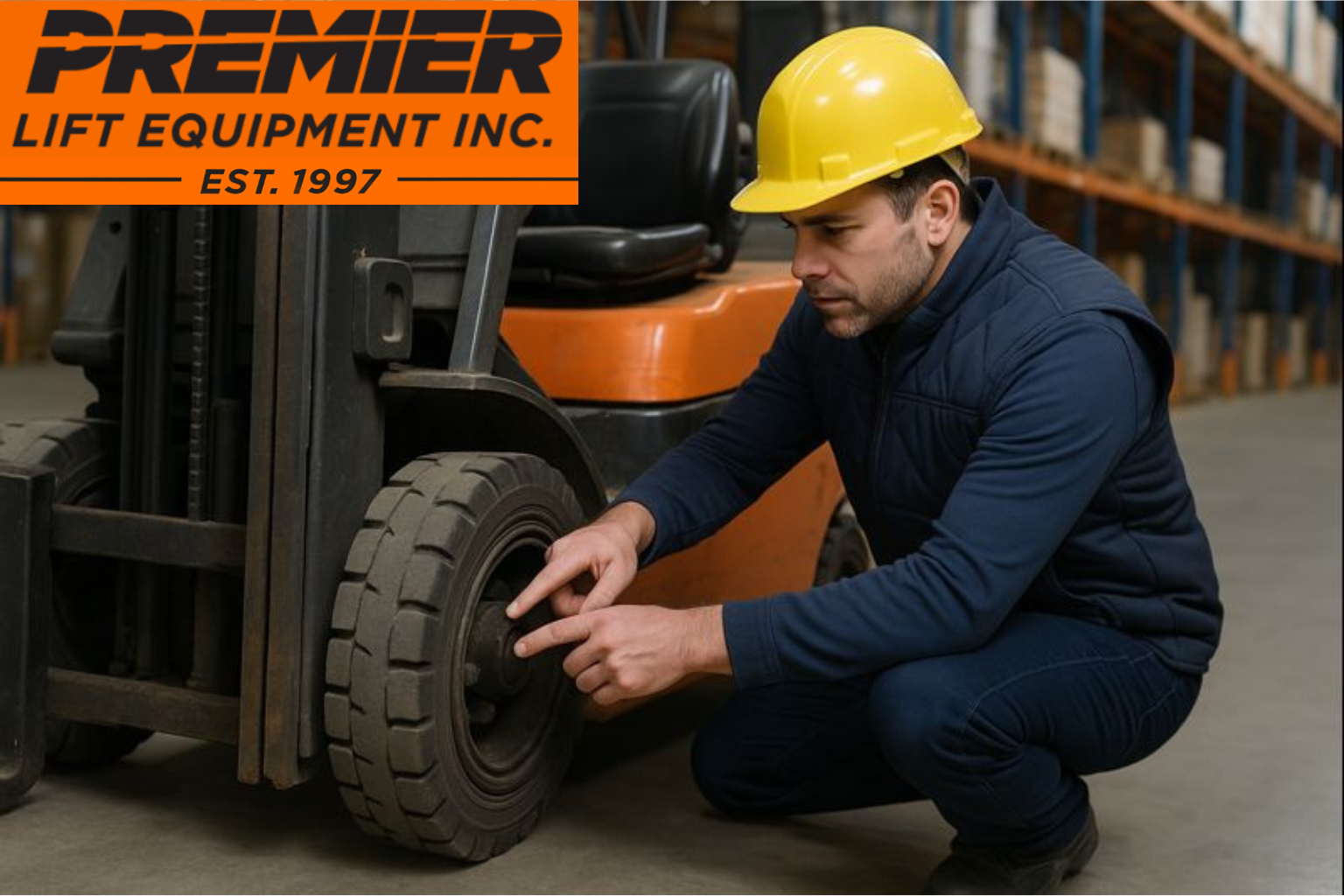
As temperatures drop and winter conditions approach, forklift maintenance becomes more critical than ever. One often-overlooked area is tire condition. Worn or damaged forklift tires can lead to reduced traction, uneven load handling, and increased safety risks—especially on cold, wet, or icy surfaces.
Before winter arrives, taking the time to inspect your forklift tires can help prevent downtime, extend equipment life, and keep operators safe. Here’s how to properly check your forklift tires for wear and determine whether they’re ready for winter conditions.
Why Forklift Tire Condition Matters More in Winter
Winter introduces hazards that amplify the impact of worn tires. Cold temperatures can harden rubber, reducing grip. Moisture, ice, and snow increase the risk of slipping, especially in outdoor yards or unheated warehouses. Tires that are already worn may struggle to maintain traction, putting both operators and loads at risk.
Regular tire inspections before winter can help you:
- Improve stability and traction
- Reduce the risk of accidents
- Protect floors and surfaces
- Avoid unexpected tire failures during peak season
Step 1: Identify Your Forklift Tire Type
Before inspecting for wear, it’s important to know what type of tires your forklift uses, as wear indicators differ.
- Pneumatic tires (air-filled): Commonly used outdoors and on uneven surfaces.
- Solid pneumatic tires: Look similar to pneumatic tires but made of solid rubber.
- Cushion tires: Pressed-on rubber tires typically used indoors on smooth floors.
Each type wears differently, but all require regular inspection—especially before winter.
Step 2: Check Tread Depth and Wear Patterns
For forklifts with treaded tires, inspect the depth and consistency of the tread.
- Look for shallow or smooth tread, which reduces traction.
- Check for uneven wear, which may indicate alignment or load distribution issues.
- Compare tires side-by-side—uneven wear across axles is a red flag.
If tread is significantly worn or nearly smooth, the tire may not perform safely in winter conditions.
Step 3: Look for Cuts, Cracks, and Chunking
Cold weather can worsen existing tire damage. Inspect each tire closely for:
- Cracks along sidewalls or tread
- Missing chunks of rubber
- Deep cuts that expose internal layers
Even minor damage can spread quickly in winter temperatures. If you see structural damage, replacement is often the safest option.
Step 4: Inspect Flat Spots and Deformation
Flat spots occur when forklifts sit idle for long periods—common during seasonal slowdowns.
- Rotate tires slowly to check for flat areas
- Watch for vibrations or uneven rolling during operation
- Pay attention to ride quality reported by operators
Flat-spotted tires reduce stability and can strain other components, especially in cold conditions.
Step 5: Check Air Pressure (for Pneumatic Tires)
For air-filled pneumatic tires:
- Verify pressure using a gauge—do not rely on visual checks
- Remember that air pressure drops as temperatures fall
- Inflate tires to the manufacturer’s recommended PSI
Underinflated tires reduce load capacity and increase wear, while overinflation can reduce traction.
Step 6: Examine the Wheels and Rims
Tire inspections should also include the wheel assembly:
- Look for bent or damaged rims
- Check for loose or missing lug nuts
- Inspect valve stems for leaks or cracking
Wheel issues can mimic tire problems and become more dangerous during winter operation.
When to Replace Forklift Tires Before Winter
Consider replacing tires before winter if you notice:
- Minimal or no tread remaining
- Deep cracks or exposed rubber layers
- Frequent loss of air pressure
- Reduced traction or increased slipping
- Operator complaints about handling or stability
Replacing tires proactively is often more cost-effective than dealing with accidents, downtime, or emergency service calls during winter.
Make Tire Inspections Part of Your Winter Prep
Forklift tires are your first line of defense against winter hazards. A thorough inspection before cold weather sets in can improve safety, protect your equipment, and keep operations running smoothly through the season.
If you’re unsure whether your forklift tires are winter-ready, a professional inspection can provide peace of mind—and help you avoid costly surprises when conditions get tough.
👉 Browse our forklift inventory
👉 Schedule service with our certified technicians
👉 Contact us today to find out how you can save up to $2,600 this month