
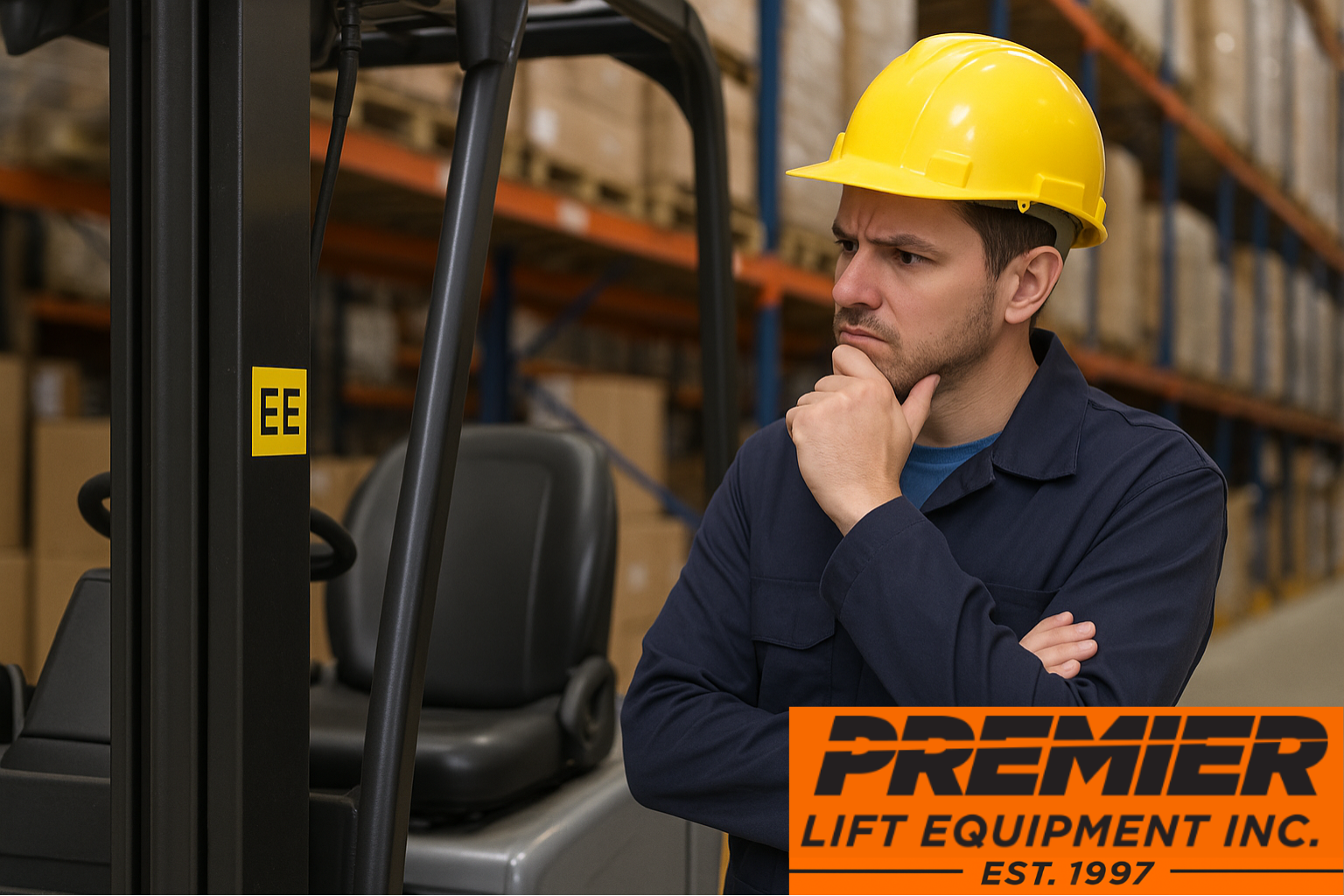
Not all electric forklifts are created equal—especially when it comes to safety. If your facility handles chemicals, dust, vapors, or other hazardous materials, the forklift rating you choose isn’t optional. It’s a critical part of regulatory compliance, insurance coverage, and worker safety.
Electric forklifts are assigned safety ratings—E, ES, EE, and EX—that define where they can legally and safely operate. Choosing the wrong rating can expose your operation to serious risks, including fires, explosions, fines, or shutdowns.
How Forklift Ratings Affect Different Equipment Types
Forklift ratings aren’t just safety labels — they determine which equipment categories can legally operate in your environment.
- Reach trucks (Raymond, Crown, Toyota): Often require EE ratings in food, chemical, or dust‑sensitive facilities.
- Stand‑up counterbalance units: Commonly operate as E or ES, unless vapors or dust are present.
- Order pickers: May require ES or EE depending on airborne dust levels.
- Swing‑mast/VNA forklifts (Drexel/Bendi): Frequently used in controlled environments where EE ratings are required.
Choosing the wrong rating can restrict where your equipment can legally operate — or expose your facility to compliance risk.
Looking for maximum warehouse efficiency? The right mast choice is critical for narrow aisle performance. This CSA-certified Raymond Reach Truck features a high-visibility triple mast, designed for stable, high-cycle operation in 24/7 environments.
Refurbished 2018 Raymond 750-DR32TT Reach Truck. 3,200 lb Capacity. 36V Electric. 288" Triple Mast. CSA-Certified. Location: Brampton, ON. National Shipping Available.
Reach Trucks for Sale | Single & Deep‑Reach Forklifts
2018 Raymond 750‑DR32TT | CSA | 3,200 lb | 288” | 36V
In this guide, we’ll break down:
- What each forklift rating means
- Where each rating is typically required
- Real-world examples of how they’re used
- How to choose the right equipment for your environment
E Rating: Standard Electric Forklifts
What It Means:
An E-rated forklift is the most basic electric classification. These units provide standard electrical protection but do not include additional safeguards against sparks, arcing, or heat.
Where They’re Used:
- General warehouses
- Distribution centers
- Retail backrooms
- Facilities with no flammable vapors, combustible dust, or hazardous materials
Example Scenario:
A pallet-only warehouse storing boxed consumer goods with no chemical exposure or dust risk would typically operate safely with E-rated forklifts.
Important to Know:
E-rated units should not be used in environments where flammable substances are present—even occasionally.
Visual idea:
Simple warehouse layout with an E-rated forklift highlighted and labeled “Non-hazardous environment.”
ES Rating: Enhanced Safeguards
What It Means:
ES-rated forklifts include additional electrical safeguards designed to reduce the risk of sparks or arcing. While not fully sealed, they provide a higher level of protection than standard E units.
Where They’re Used:
- Facilities with minor hazards
- Areas with light dust or limited sensitivity
- Operations where occasional risk exists but is controlled
Example Scenario:
A packaging facility that generates light cardboard dust but does not handle chemicals may require ES-rated equipment to minimize ignition risk.
Key Difference from E Rating:
ES forklifts add protective measures—but they are not suitable for environments with flammable vapors or combustible dust.
Visual idea:
Side-by-side comparison diagram showing E vs. ES electrical component protection.
EE Rating: Enclosed Electrical Systems
What It Means:
EE-rated forklifts take safety a step further. All major electrical components—including motors, wiring, switches, and controllers—are fully enclosed to prevent exposure to hazardous substances.
Where They’re Required:
- Facilities with flammable vapors
- Environments with combustible dust
- Operations involving chemicals or solvents
Common Industries:
- Chemical plants
- Food processing facilities
- Pharmaceutical manufacturing
- Paint, coating, or adhesive production
- Controlled manufacturing environments
Example Scenario:
A food processing facility using powdered ingredients like flour or sugar may require EE-rated forklifts to prevent dust ignition inside electrical components.
Why EE Matters:
Even small sparks inside an exposed motor can ignite dust or vapors. EE ratings eliminate that risk by sealing the system.
Visual idea:
Cutaway illustration of an EE forklift showing enclosed motors and wiring.
How Manufacturers Build to Different Safety Ratings
Not all electric forklifts are engineered the same way.
- Toyota designs ES and EE units with fully enclosed motors and sealed controllers.
- Raymond reach trucks often include EE‑ready wiring harnesses for food and pharmaceutical environments.
- Crown integrates sealed contactors and spark‑resistant components in their EE models.
- Drexel swing‑mast units are commonly configured for EE environments due to their VNA applications.
EX Rating: Explosion-Proof Forklifts
What It Means:
EX-rated forklifts offer the highest level of protection available. These units are specifically engineered to operate safely in explosive atmospheres.
They are designed so that no internal spark, arc, or heat source can ignite the surrounding environment.
Where They’re Used:
- Class I, II, and III hazardous locations, including:
- Explosive gases
- Highly combustible dust
- Fibers or flyings that ignite easily
Example Scenario:
A chemical refinery handling volatile gases or a grain facility with dense airborne dust may legally require EX-rated forklifts.
Important Considerations:
- EX forklifts are specialized and highly regulated
- Strict documentation and certification are required
- Not interchangeable with EE or ES units
Visual idea:
Hazard classification chart mapping Class I, II, III locations to EX-rated forklifts.
Compliance, CSA Standards & MLITSD Requirements
Under CSA B335‑25 and MLITSD 2026 guidelines, forklift ratings must match the hazard classification of the environment.
This affects:
- Insurance eligibility
- Audit outcomes
- Legal operating requirements
- Worker safety
- Documentation and data plate accuracy
Using an E‑rated forklift in an EE‑required zone can invalidate insurance coverage and trigger fines during inspections.
Why Forklift Ratings Matter
Choosing the correct forklift rating isn’t just best practice—it’s often a legal requirement.
Key Reasons Ratings Matter:
- Safety compliance with CSA and workplace regulations
- Insurance requirements and liability protection
- Worker safety and accident prevention
- Avoiding fines, citations, or shutdowns
- Matching equipment to hazard classifications
Using an under-rated forklift in a hazardous area can invalidate insurance coverage and expose your company to serious consequences.
How Premier Lift Supports Compliance
At Premier Lift, we help customers navigate forklift ratings with confidence—not guesswork.
How We Help:
- CSA inspections and certification
- Expert guidance on selecting the correct forklift rating
- Access to EE- and EX-rated units when required
- Full documentation provided prior to delivery
- Support during audits, inspections, and facility changes
If your environment has changed—or you’re unsure whether your current forklifts are compliant—we can help assess and recommend the right solution.
Choosing the right forklift rating is essential for safe operations, regulatory compliance, and long-term peace of mind. Understanding the differences between E, ES, EE, and EX ensures your facility operates within code and protects both your team and your investment.
If you’re unsure which rating applies to your operation, Premier Lift can help you determine the correct classification and supply equipment that meets your requirements.
Explore CSA‑Certified Equipment Categories
- EE‑Rated Reach Trucks — For food, chemical, and dust‑sensitive environments
- EE‑Rated Stand‑Up Counterbalance Forklifts — Toyota, Raymond, Crown
- EX‑Rated Units — For Class I/II/III hazardous locations
- Electric Forklifts (E/ES/EE) — CSA‑certified and ready for inspection
👉 Browse our CSA certified inventory here!