
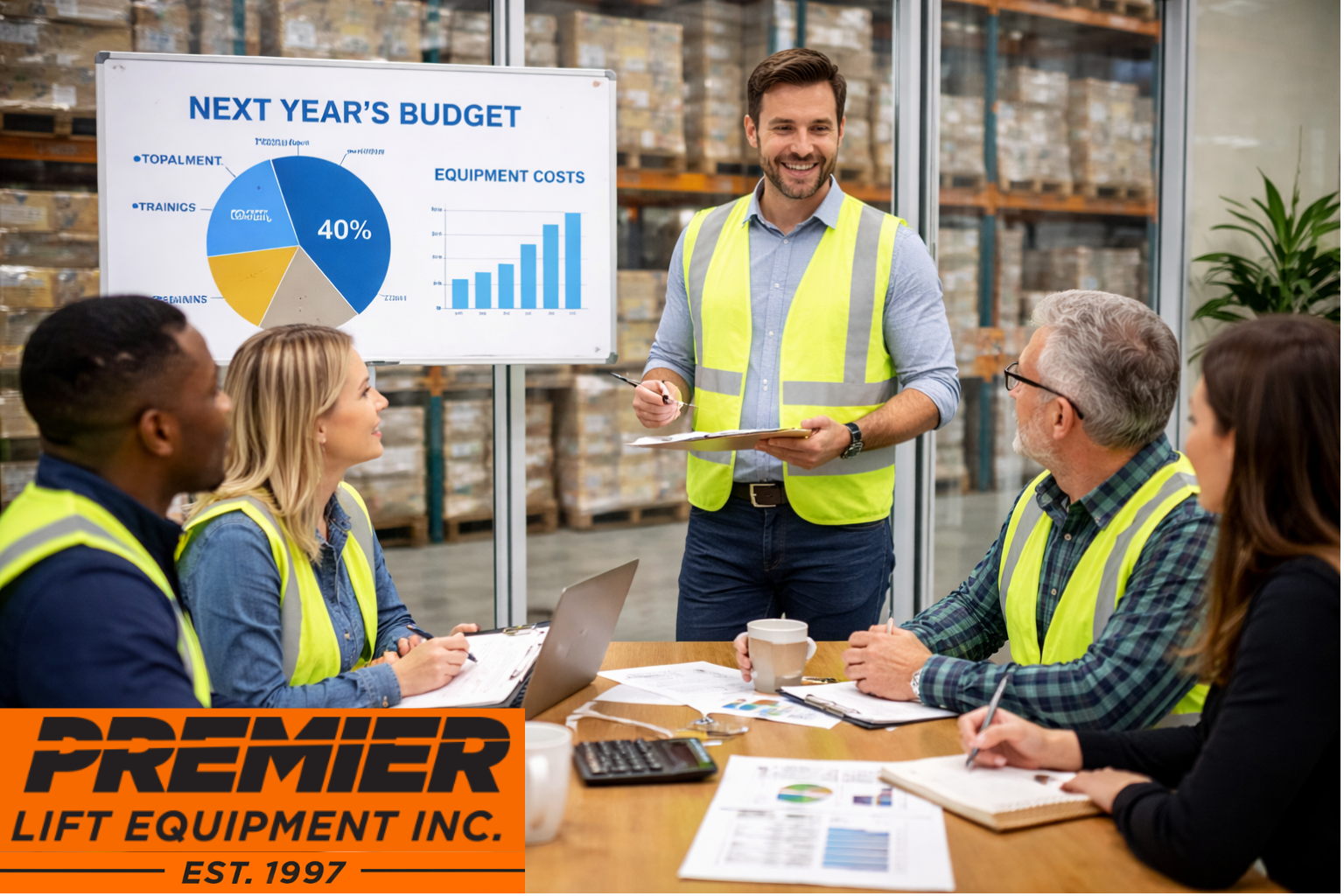
Planning next year’s budget means looking beyond purchase price—and forklift ownership is no exception. While the upfront cost of a forklift is easy to see, the true cost of ownership includes maintenance, parts, inspections, training, and unexpected downtime.
Whether you operate a single truck or manage a full fleet, understanding these costs in advance helps you avoid surprises and keep your operation running smoothly.
This guide breaks down the key expenses to consider when budgeting for forklift ownership next year.
Equipment Purchase or Replacement Costs
The largest line item in most forklift budgets is the equipment itself.
When planning, consider:
- New vs. refurbished forklifts
- Replacement timelines for aging units
- Capacity, height, and environment requirements
- Electric vs. internal combustion
Refurbished forklifts can offer significant upfront savings, but budgeting should also account for expected lifespan and future service needs.
Preventative Maintenance and Repairs
Routine maintenance is one of the most important—and often underestimated—costs of forklift ownership.
Your budget should include:
- Planned maintenance (PM) visits
- Wear items such as filters, fluids, tires, and brakes
- Minor repairs caught during inspections
Consistent maintenance reduces breakdowns, extends equipment life, and lowers long-term costs.
Unexpected Downtime and Emergency Repairs
Even with good maintenance, unplanned issues can arise.
Consider budgeting for:
- Emergency service calls
- Rush parts or expedited shipping
- Temporary rentals during extended downtime
Having a contingency budget helps avoid production delays when something goes wrong.
Parts and Wear Components
Forklifts rely on consumable components that wear over time.
Common items to budget for include:
- Forks and attachments
- Chains and rollers
- Tires and wheels
- Hydraulic hoses and seals
Proactive replacement of worn parts helps prevent safety risks and more expensive failures.
Batteries, Charging, and Power Costs (Electric Forklifts)
Electric forklift fleets require additional planning.
Budget considerations include:
- Battery replacement or refurbishment
- Battery watering and maintenance systems
- Chargers and electrical infrastructure
- Energy consumption
Neglecting battery health can shorten equipment life and increase downtime.
Safety Inspections and Compliance
Compliance isn’t optional—and it comes with costs.
Plan for:
- CSA and MOL inspections
- Safety certifications
- Documentation and audit support
Staying compliant protects your team and prevents fines or shutdowns.
Operator Training and Certification
Well-trained operators reduce accidents, damage, and wear.
Your budget should account for:
- Initial operator certification
- Refresher training
- Training for new equipment or attachments
Training costs are small compared to the cost of an incident.
Insurance and Risk Management
Forklift ownership impacts insurance premiums and liability exposure.
Budget for:
- Equipment insurance
- Damage deductibles
- Risk mitigation through inspections and training
Investing in safety often reduces insurance-related costs over time.
Rentals and Seasonal Equipment Needs
Some operations require additional equipment during peak periods.
Consider budgeting for:
- Short-term rentals
- Backup units
- Specialized attachments used seasonally
Planning ahead avoids premium pricing during busy periods.
Planning for Growth and Future Needs
Finally, consider where your operation is headed.
Ask yourself:
- Will volume increase next year?
- Do layout changes require different equipment?
- Are narrow aisle or VNA solutions needed?
Budgeting with growth in mind prevents rushed decisions later.
How Premier Lift Helps You Budget Smarter
At Premier Lift, we help customers understand the full cost of forklift ownership, not just the purchase price.
We offer:
- Equipment sales and refurbished options
- Planned maintenance programs
- Parts, service, and compliance support
- Fleet assessments and budgeting guidance
Our goal is to help you plan with confidence and avoid costly surprises.
Forklift ownership is an investment—and like any investment, it requires careful planning. By budgeting for the full range of ownership costs, you can reduce downtime, improve safety, and protect your operation throughout the year.
If you’re planning next year’s budget and want help evaluating your fleet, our team is here to help.
👉 Browse our CSA certified inventory now!
👉 Talk to our team about signing up for our budget-friendly Planned Maintenance program!