
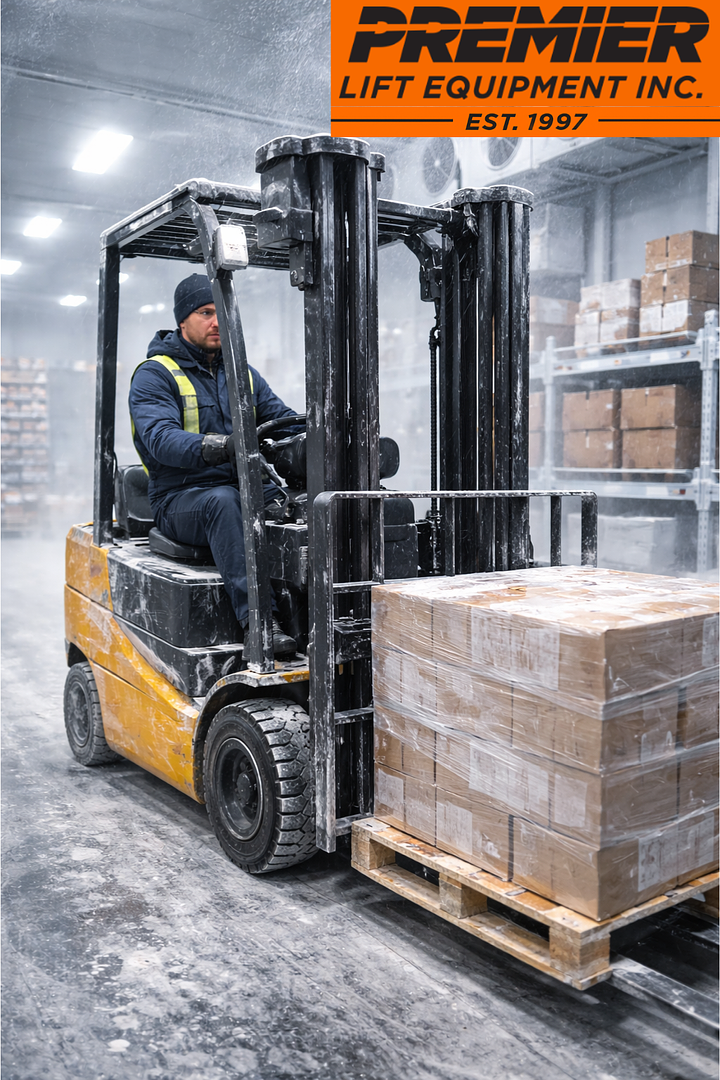
Cold storage environments are some of the toughest places for material-handling equipment to operate. Freezers, blast chillers, and refrigerated warehouses expose forklifts to extreme temperatures, condensation, and constant thermal shock—conditions that standard equipment simply isn’t built to handle.
If your operation relies on forklifts in cold storage, choosing the wrong equipment or skipping cold-rated maintenance can lead to frequent breakdowns, safety risks, and costly downtime.
Here’s what you need to know before putting forklifts into cold environments.
Why Cold Storage Is Hard on Forklifts
Cold temperatures affect nearly every component on a forklift. As temperatures drop, materials contract, fluids thicken, and electronics become less reliable.
Common cold-related issues include:
- Batteries losing capacity faster
- Hydraulic systems responding slowly or failing
- Brittle wiring, seals, and hoses cracking
- Condensation forming when trucks move between warm and cold zones
- Increased corrosion from moisture buildup
Without proper preparation, even newer forklifts can struggle in freezer conditions.
The Harsh Truth About Running Forklifts In and Out of a Cooler
One thing most people don’t realize is how much going in and out of a cooler absolutely punishes a forklift. The constant temperature swings create condensation, and that moisture gets into everything — wiring, connectors, cylinders, seals, you name it.
Machines that stay inside the freezer full‑time actually last longer than machines that bounce in and out all day. It’s the temperature cycling that destroys them, not the cold itself.
Choosing the Right Forklift for Cold Storage
Electric Forklifts Are Typically Preferred
Electric forklifts are most commonly used in cold storage because they:
- Produce zero emissions
- Perform better indoors
- Reduce heat and ventilation concerns
- Offer more predictable performance when properly cold-rated
That said, not all electric forklifts are cold-storage ready without modifications.
The One Thing I Wish Every Cold‑Storage Customer Understood
If there’s one message I wish every customer understood, it’s this:
Condensation is the real enemy — not the cold.
Cold storage kills batteries faster, destroys wiring, and shortens the life of every component if the truck isn’t properly sealed and equipped. The right hydraulic fluid, the right seals, and the right cold‑rated package aren’t “nice to have” — they’re the difference between uptime and constant breakdowns.
Cold Storage Packages Matter
Forklifts used in refrigerated or freezer environments should be equipped with cold storage or freezer packages, which may include:
- Cold-rated hydraulic oil
- Low-temperature seals and hoses
- Enclosed or heated operator compartments
- Moisture-resistant electrical components
- Special coatings to reduce corrosion
The colder the environment, the more critical these upgrades become.
Battery Performance in Cold Environments
Batteries are one of the first things to suffer in cold storage.
Key considerations:
- Battery capacity drops significantly in cold temperatures
- Charging should occur in a temperature-controlled area
- Condensation during charging can damage cells and connectors
- Lithium-ion batteries may perform better in some cold applications
Proper battery handling and charging procedures are essential to maintaining uptime.
👉 Have your battery setup inspected and reviewed to avoid cold-related failures.
Tires, Traction, and Floor Conditions
Cold storage floors often have moisture, frost, or ice buildup.
You’ll want:
- Tires designed for low-temperature traction
- Proper tread patterns for slick surfaces
- Regular inspections for flat spotting or cracking
Poor traction increases safety risks and accelerates wear on drive components.
Operator Comfort and Safety
Cold environments don’t just affect equipment—they affect people.
Important operator considerations include:
- Heated or enclosed cabs
- Anti-fog windshields
- Controls that remain responsive in cold conditions
- Reduced exposure to extreme temperatures
Comfort directly impacts productivity, focus, and safety.
CSA & MLITSD Compliance in Cold Storage Environments
Under CSA B335‑25 and MLITSD 2026 guidelines, cold‑storage operations require equipment that can safely handle condensation, reduced visibility, and extreme temperature cycling.
This affects:
- Electrical system sealing
- Battery performance and charging
- Hydraulic fluid selection
- Cylinder and seal integrity
- Inspection frequency
- Running a non‑freezer‑rated forklift in a cold environment isn’t just a maintenance issue — it’s a compliance and safety issue.
Maintenance Is More Important in Cold Storage
Cold storage forklifts require more frequent inspections and maintenance, not less.
A strong maintenance plan should include:
- Regular checks of seals, hoses, and wiring
- Battery and charging system inspections
- Monitoring for moisture and corrosion
- Adjusted service intervals for cold conditions
Skipping maintenance in cold environments almost always leads to emergency repairs later.
👉 Schedule preventative maintenance tailored for cold storage operations.
What I Look for the Moment I Walk Into a Freezer Warehouse
When I walk into a cold‑storage facility, the first thing I look for is moisture and rust buildup on the lift cylinders. That tells me instantly how the truck is being used and whether condensation is getting ahead of the maintenance schedule.
If I see frost on the mast, sweating electrical components, or rust forming around seals, I already know the equipment is taking a beating. Condensation is the silent killer — it destroys electronics, wiring, cylinders, and seals long before the customer realizes what’s happening.
Compliance and Safety Considerations
Cold storage facilities often operate in regulated industries such as food, pharmaceuticals, and logistics.
Make sure your forklifts:
- Meet CSA and safety requirements
- Are properly documented and certified
- Are suitable for temperature-controlled environments
- Pass inspections without issue
Using the wrong equipment can lead to failed audits, shutdowns, or safety incidents.
How Premier Lift Supports Cold Storage Operations
At Premier Lift Equipment, we help customers select, maintain, and support forklifts specifically for cold storage and freezer environments.
We assist with:
- Selecting cold-rated and freezer-ready equipment
- Battery and charging solutions
- Preventative maintenance programs
- CSA compliance and documentation
- Ongoing service support to minimize downtime
We focus on keeping your operation moving—no matter the temperature.
Cold storage forklifts face unique challenges, but with the right equipment, preparation, and maintenance strategy, they can operate reliably year-round.
If your forklifts work in refrigerated or freezer environments, planning ahead is critical. The cost of doing it right is always lower than the cost of breakdowns in the cold.
Explore Freezer‑Ready Equipment Options
- EE‑Rated Electric Forklifts — Better sealing for moisture‑heavy environments
- Stand‑Up Counterbalance Units — Ideal for tight freezer aisles
- Reach Trucks for Cold Storage — Designed for high‑lift freezer applications
- CSA‑Certified Freezer Packages — Built to survive condensation and temperature cycling
Choosing the right cold‑storage forklift protects your equipment, your operators, and your uptime.