
Pallet Jacks – Electric Walkie, Rider & Manual
Specifications
| Manufacturer | Premier |
| Condition | Refurbished |
| Part ID | 5951776 |
| Store Code | PLE1 |
| Classification | Category Page ( Not an Equipment Listing) |
| Certification | CSA/MOL Certified |
| Load Center | 24" |
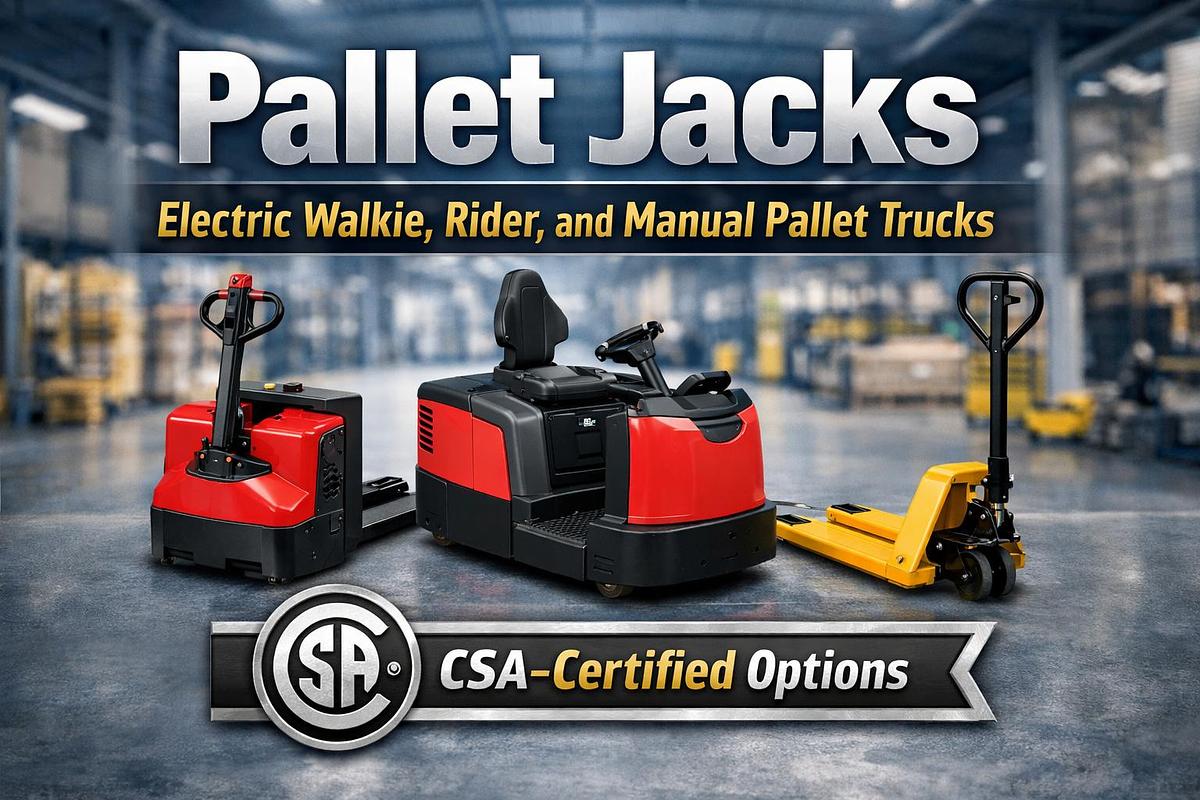
| Category Overview | This page represents our Pallet Jack category, including electric walkie pallet jacks, electric rider pallet jacks, and manual pallet trucks. Use it to compare capacities, fork lengths, battery types, and turning‑radius requirements for warehouse pallet transport, dock work, and tight‑aisle material handling. CSA‑ready documentation packages are available for facilities requiring compliant pallet‑handling equipment. |
| Frequently Asked Questions (FAQ) | What is an electric walkie pallet jack? An electric walkie pallet jack is a powered pallet truck designed for low‑level pallet movement, offering electric drive and lift for efficient material handling with minimal operator effort. Where are electric pallet jacks typically used? They are commonly used in warehouses, retail distribution, manufacturing plants, and delivery operations requiring frequent pallet transport over short distances. What capacities are available? Typical electric pallet jacks range from 4,000–6,000 lb, depending on the model and application. What fork lengths are available? Standard fork lengths are 27x48, with shorter and longer options available for specialized applications. Are lithium‑ion pallet jacks available? Yes. Many models are available with lithium‑ion batteries for fast charging, longer runtime, and reduced maintenance. Are these units suitable for tight spaces? Yes. Electric pallet jacks are designed for excellent maneuverability in narrow aisles, trailers, and congested warehouse areas. Are these units CSA‑certified? Yes. All electric pallet jacks supplied by Premier Lift Equipment can be delivered CSA B335 compliant with full documentation for MOL and facility audits. Can pallet jacks be used on ramps? Most units can handle moderate inclines, but performance depends on load weight and surface conditions. Do you offer service and parts support? Yes. Premier Lift Equipment provides full service, repairs, inspections, and parts support for all major pallet jack brands. |
| Category Title | Pallet Jacks |
| Supported Manufacturers | Raymond · Toyota · Crown · Yale · Hyster · Jungheinrich · Linde · Komatsu · Cat · Mitsubishi · UniCarriers · Doosan · Hangcha |
| Equipment Types Included | Electric Walkie Pallet Jacks • Electric Rider Pallet Jacks • Manual Pallet Trucks • Low‑Profile Pallet Jacks • Wide‑Fork Pallet Jacks • Freezer‑Rated Pallet Jacks • High‑Capacity Pallet Jacks |
| SUBCATEGORY INDEX | Pallet Jacks include the following subcategories: |
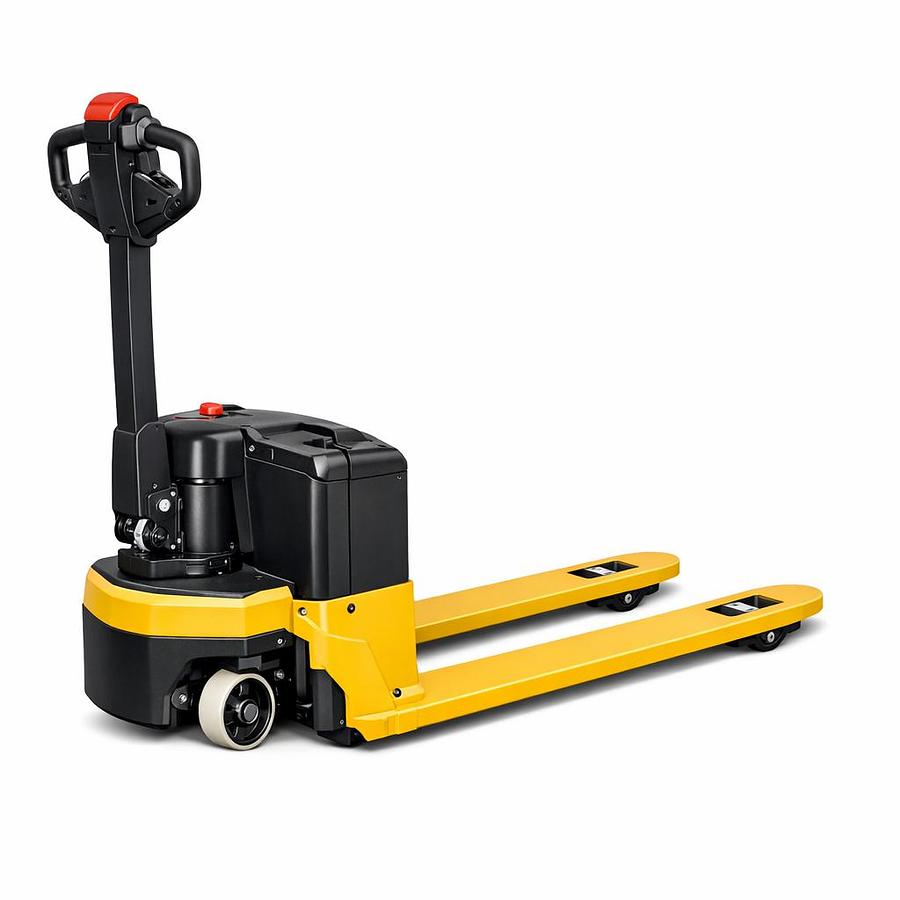
| Electric Walkie Pallet Jacks | 24V/36V powered walk‑behind units for warehouse pallet transport and dock work. |
| Electric Rider Pallet Jacks | Stand‑on or ride‑on pallet movers for high‑volume, long‑distance warehouse travel. |
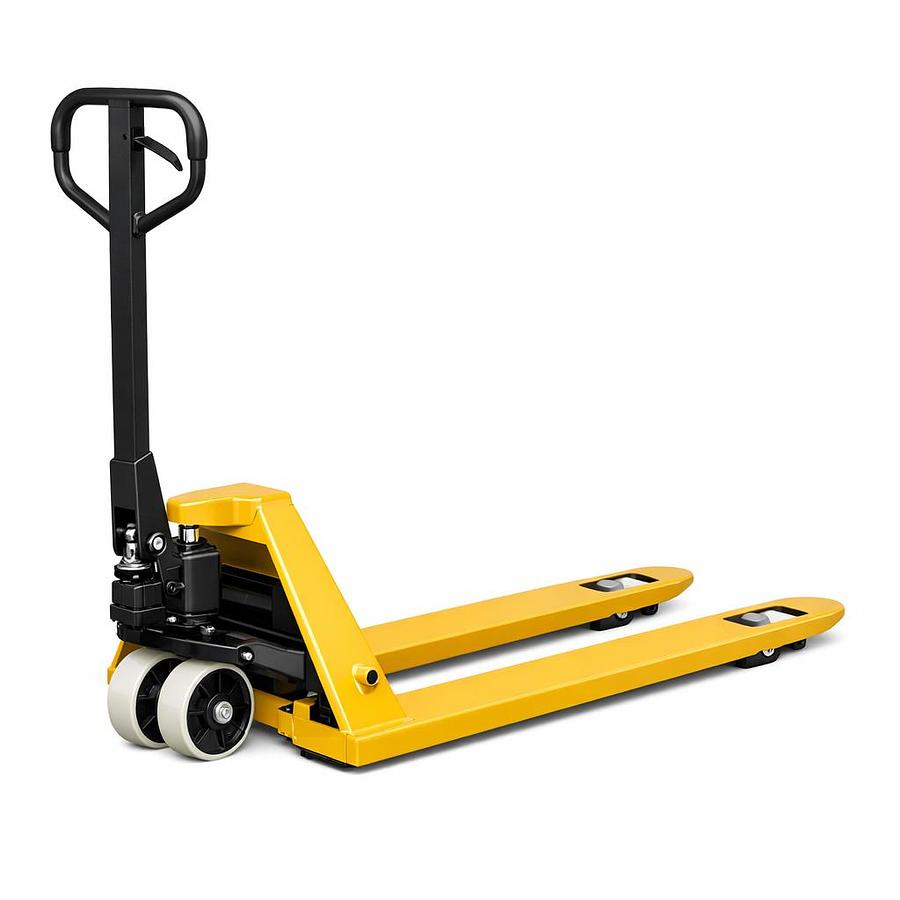
| Manual Pallet Trucks | Hand‑operated pallet jacks for general warehouse, retail, and light industrial use. |
| Freezer‑Rated Pallet Jacks | Low‑temperature hydraulics and sealed electronics for cold‑storage environments. |
| High‑Capacity Pallet Jacks | Reinforced frames and upgraded hydraulics for heavy industrial loads. |
| SAFETY STANDARDS & COMPLIANCE | All pallet jacks in this category support CSA‑aligned safety and operational standards. Documentation and configuration options support: • CSA B335 industrial truck requirements • MOL pedestrian‑awareness protocols • Dock‑safety expectations • Trailer‑loading safety guidelines • Freezer‑room operational requirements • Ergonomic handle and control designs Units can be configured with facility‑specific safety accessories, including: • Blue lights • Red‑zone lights • Audible alarms • Bilingual safety signage • Freezer‑rated components |
| COMPATIBILITY & USE CASES | Pallet Jacks are compatible with: • Warehousing • 3PL and logistics • Retail distribution • Grocery and food service • Manufacturing • Packaging • Cold storage • Shipping and receiving Common use cases include: • Dock loading and unloading • Trailer and container work • Tight‑aisle pallet movement • Case‑picking support • Warehouse replenishment • Low‑level transport |
| FLEET DEPLOYMENT & INTEGRATION | Pallet jacks can be deployed across single facilities or multi‑site operations with standardized configurations. Programs include: • Dock‑area equipment standardization • Multi‑shift battery and charger planning • Freezer‑rated pallet jack packages • Telematics and operator‑tracking integration • Seasonal warehouse‑capacity upgrades • Retail and grocery distribution programs These solutions support consistent performance across mixed fleets and high‑volume pallet‑handling environments. |
| WHY THIS CATEGORY MATTERS | Pallet jacks are essential for: • Fast pallet movement • Efficient dock operations • Safe trailer loading • Tight‑aisle maneuverability • Reducing forklift congestion • Improving warehouse throughput • Supporting CSA/MOL compliance They deliver measurable ROI through reduced travel time, improved workflow efficiency, and lower operating costs. |
| WHO THIS CATEGORY IS FOR | This category serves operations requiring low‑level pallet transport, including: • Warehousing • 3PL and logistics • Retail and grocery • Cold storage • Manufacturing • Packaging • Shipping and receiving • E‑commerce fulfillment |
| RELATED CATEGORIES | Electric Walkie Pallet Jacks • Electric Rider Pallet Jacks • Manual Pallet Trucks • Walkie Reach Stackers • Electric Counterbalance Forklifts • Warehouse Safety Equipment |
| Category Overview Title | Electric Walkie, Rider & Manual Pallet Jacks |
| Category Overview Summary | Premier Lift Equipment supplies CSA‑ready electric walkie, rider, and manual pallet jacks for warehouse pallet transport, dock work, and tight‑aisle material handling. |
Description
Heavy-Duty 2026 Electric & Manual Pallet Jacks | 24V Power Systems | CSA/MOL Compliant | Ready for Immediate Delivery.
Pallet jacks are essential for fast, low‑level pallet movement, dock work, and tight‑aisle warehouse operations where forklifts are not required. Electric walkie and rider pallet jacks deliver efficient, operator‑friendly performance for high‑volume workflows, while manual pallet trucks provide cost‑effective versatility for general warehouse use. These units are ideal for distribution centers, 3PL operations, retail and grocery environments, manufacturing, and cold‑storage facilities requiring CSA‑aligned, emission‑free equipment with reliable daily performance.
Pallet jacks — including electric walkie pallet jacks, electric rider pallet jacks, and manual pallet trucks — are the foundation of low‑level material handling in warehouses, distribution centers, and manufacturing environments. These units are engineered for fast pallet movement, dock work, trailer loading, and tight‑aisle maneuvering where forklifts are not required.
Electric walkie and rider pallet jacks deliver efficient, operator‑friendly performance for medium‑ to high‑volume workflows, while manual pallet trucks provide cost‑effective versatility for general warehouse use. Capacities range from 4,000–6,000 lb with 24V/36V electric power options and CSA/MOL‑certified configurations available for Canadian workplaces.
Common Applications:
• Dock loading and unloading
• Warehouse pallet transport
• Trailer and container work
• Retail and grocery distribution
• Manufacturing and packaging
• Tight‑aisle pallet movement
Explore Related Equipment:
• Electric Walkie Pallet Jacks
• Electric Counterbalance Forklifts
Chassis-Only Forklift Pricing | Transparent & Tailored
Return Policy: Material‑handling equipment is sold as‑is with no returns accepted.
2026 Operational Compliance & Asset Verification All equipment listed by Premier Lift Equipment is verified for alignment with CSA B335:25 (National Standard of Canada) and MLITSD (Ontario Ministry of Labour) safety requirements. Whether you are operating in a 3PL warehouse, food-grade distribution, or heavy industrial site, this unit is processed through our 25-Point Asset Integrity Audit to ensure it is audit-ready for your next provincial safety blitz.
- Regional Compliance: Documentation provided for Ontario (GTA), broader Canada, and export-ready for US/Caribbean logistics.
- Green-Zone Readiness: Our electric inventory is evaluated for high-cycle efficiency and indoor air quality standards.
- Certified Support: Every listing is backed by our Brampton-based technical team, specializing in forklift certification, fleet maintenance, and long-term ROI strategy.
Equipment Compliance & Quality
All pallet jacks within this master category are supplied in alignment with CSA B335 safety standards and MOL compliance expectations. Documentation packages can include CSA/MOL inspection records, battery and charger compatibility details for electric units, freezer‑rated configuration information, and facility‑specific planning data for dock operations, retail distribution, and warehouse pallet‑handling environments. Requirements may vary based on fork size, voltage class, wheel type, and warehouse layout. Please confirm compliance and documentation needs with our team before deployment.