Downtime isn’t just a repair bill — it’s stalled production, missed loading windows, frustrated operators, and MLITSD exposure you didn’t plan for.
The truth is simple: most forklift failures are predictable, and with CSA‑aligned inspections, they’re preventable.
Here are the five components that fail first — and how proper inspection discipline protects your uptime, your operators, and your compliance.
1. Forklift Tires
Why they fail
Uneven floors, heavy loads, tight turning, and high‑throughput environments accelerate wear.
Early warning signs
- Reduced traction
- Excessive vibration
- Cracking or chunking
Why it matters
Worn tires increase operator fatigue, reduce steering control, and place strain on mast bearings — a mechanical‑debt multiplier.
CSA‑aligned prevention
- Measure tire wear monthly
- Replace cushion tires at the 3× wear line
- Rotate front tires more often — they carry load + steering stress
2. Batteries (Electric Forklifts)
Why they fail
Opportunity charging, partial charging, and “quick top‑ups” shorten battery life dramatically.
Early warning signs
- Shorter runtime
- Acid residue
- Sulfation (white powder buildup)
Why it matters
Weak batteries cause slow lifts, reduced travel speed, and unpredictable shutdowns — all flagged in MLITSD inspections.
CSA‑aligned prevention
- Charge only at 20–30%
- Complete full charge cycles
- Water & equalize quarterly
A properly maintained battery lasts 5–7 years.
A poorly maintained one? Sometimes under two.
3. Lift Chains
Why they fail
Friction, corrosion, and lack of lubrication.
Early warning signs
- Stiff mast movement
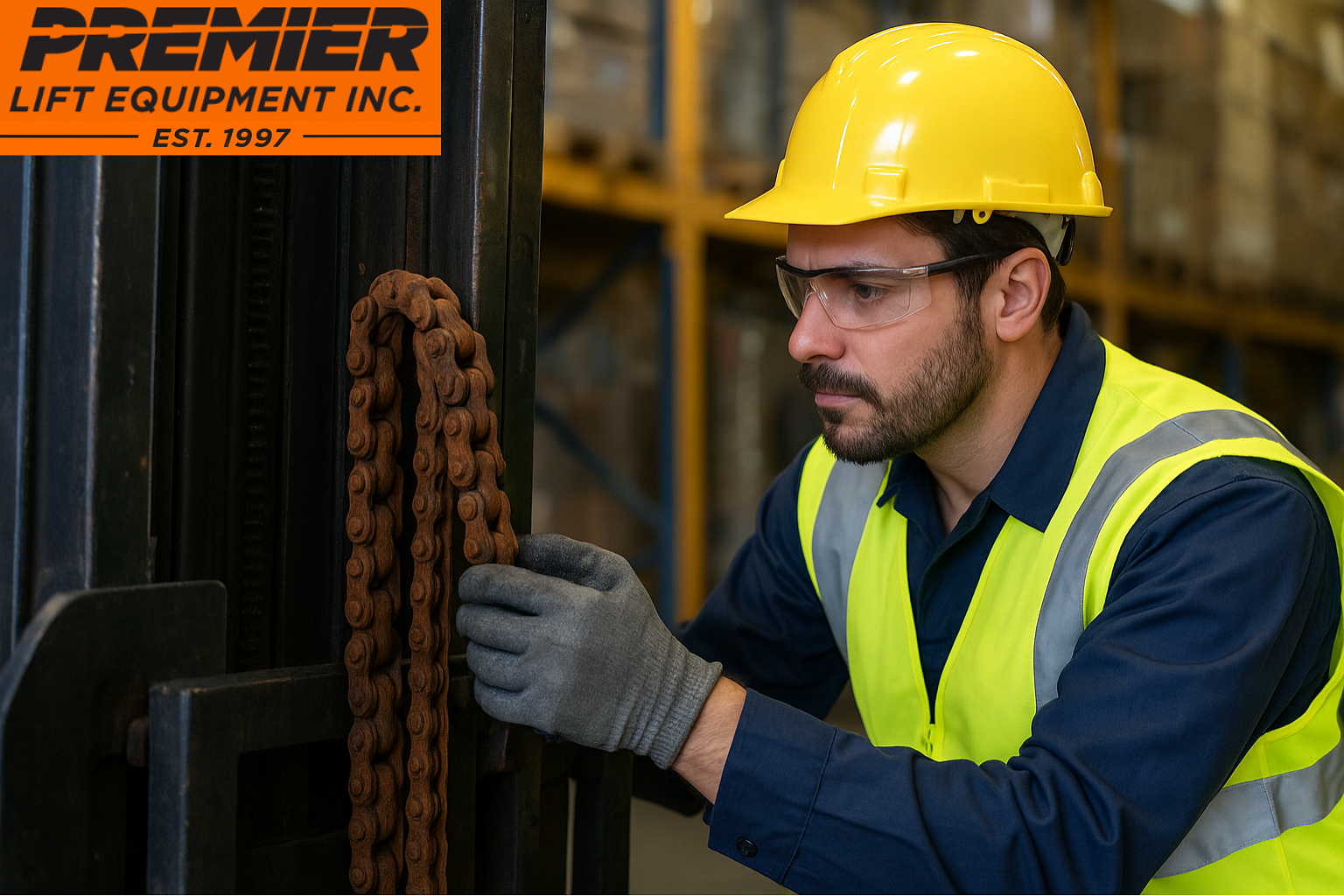
- Rust on links
- Kinking or elongation
Why it matters
Chains carry 90% of the lifting force.
Chain failure is a critical CSA safety violation.
CSA‑aligned prevention
- Inspect every 250 hours
- Replace at 2% wear
- Lubricate properly — never with WD‑40
4. Forks
Why they fail
Overloading, impact damage, and improper handling.
Early warning signs
- Uneven fork heights
- Visible bending
- Cracks at heel or shank
Why it matters
Bent forks shift the load centre, increasing tip‑over risk — a direct MLITSD compliance issue.
CSA‑aligned prevention
- Measure fork thickness; replace at 10% wear
- Never pry or push with forks
- Use fork protectors for metal‑corner skids
Fork failure is rarely sudden.
It’s gradual — and visible.
5. Cooling System (IC Forklifts)
Why they fail
Dust, debris, low coolant, and ignored leaks.
Early warning signs
- Overheating
- Frequent coolant top‑ups
- Residue around hoses
Why it matters
Overheating leads to blown head gaskets — one of the most expensive IC repairs and a major downtime event.
CSA‑aligned prevention
- Inspect coolant + hoses every 250 hours
- Blow out radiator fins weekly in dusty environments
- Replace coolant every 12–24 months
⭐ The Common Thread: Downtime Is Preventable
Breakdowns don’t “just happen.”
They happen when components are ignored.
That’s why every Premier Lift CSA Inspection & Planned Maintenance Service includes:
- Tire condition measurement
- Battery & charger evaluation
- Lift chain wear measurement
- Fork thickness & alignment checks
- Cooling system diagnostics
- Documentation packages for MLITSD audits
Because in material handling, accuracy is protection.
⭐ Protect Your Uptime
For fleets of 1 or 100+, our CSA‑aligned PM program keeps your operation:
- predictable
- compliant
- audit‑ready
- mechanically healthy
Quiet forklifts.
Fewer breakdowns.
More uptime.
Your team deserves that — and your customers expect it.
🚧 Want fewer breakdowns and more uptime?
For fleets of 1 or 100+, our planned maintenance program keeps you operational, compliant, and predictable.
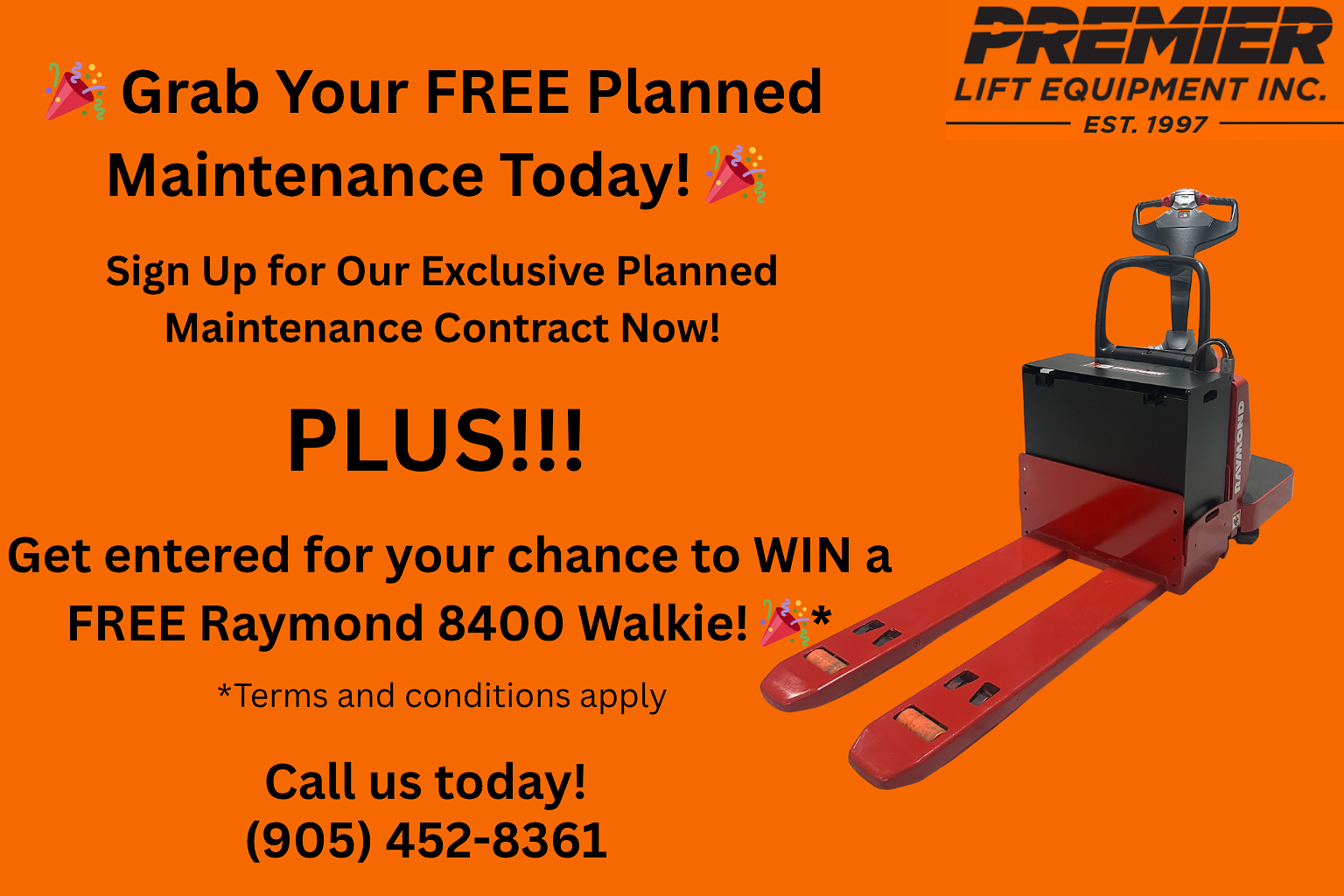
👉 Book a Planned Maintenance Service on our PM contract and get one free PM, PLUS get a chance to win a 2007 Raymond 8400 for free! Contact us for more details.
👉 Need parts? Our team will source and ship immediately.
👉 Browse our CSA certified inventory here!