
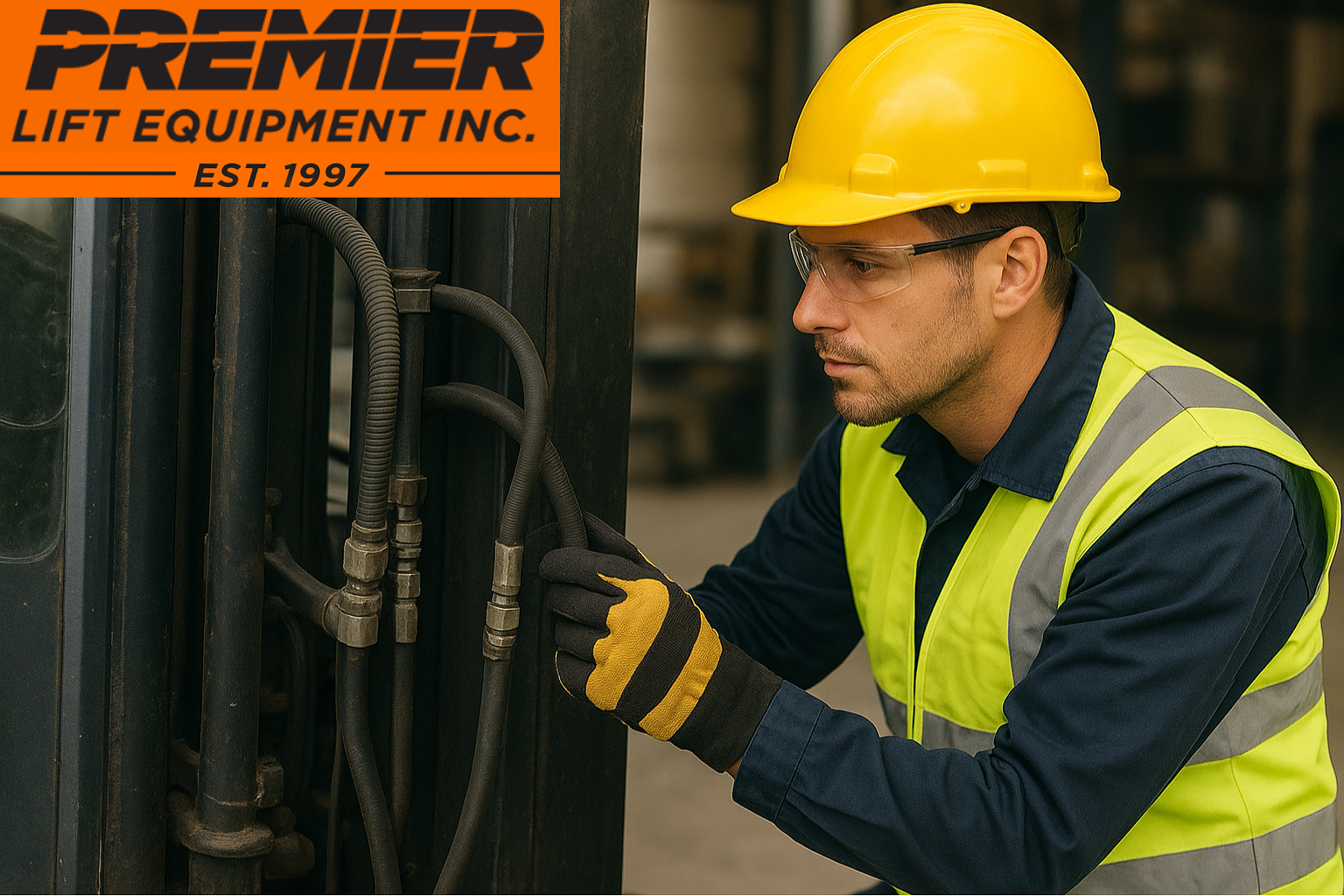
Hydraulic leaks are one of the most common issues in aging forklifts—and one of the most preventable. A small leak can lead to lost lifting power, safety risks, and costly downtime, especially in units with high hours. With the right inspections and maintenance habits, older forklifts can run clean and leak-free for years.
Why Older Forklifts Leak More
As forklifts age, several components naturally wear down:
- Seals dry out or harden
- Hoses become brittle and crack
- Fittings loosen from vibration
- Cylinder rods develop scoring
- Hydraulic fluid breaks down from heat cycles
The good news: most of these issues can be spotted early.
1. Inspect Hydraulic Hoses Regularly
Hoses are the most frequent leak point in older forklifts. Look for:
- Oil residue or mist
- Cracking, blistering, or stiffness
- Hoses rubbing against other components
Add protective sleeves or separators anywhere hoses touch. A small rub point will eventually become a rupture.
2. Tighten and Inspect Fittings
Years of vibration can loosen hydraulic fittings. During routine checks:
- Tighten loose fittings gently
- Inspect threads for wear
- Replace cheap aftermarket fittings with OEM or certified parts
Sometimes a quarter-turn is all it takes to stop a developing leak.
3. Monitor Hydraulic Fluid Quality
Hydraulic systems rely on clean, healthy fluid. Watch for:
- Dark or milky fluid
- Burnt smell
- Metal flakes
Contaminated or overheated fluid accelerates seal wear. If the fluid looks questionable, replace it—and flush the system if needed.
4. Check Cylinder Rods for Damage
Cylinder rods on older forklifts often develop scoring or rust. When damaged rods pass through seals, they quickly cause leaks.
Spot early warning signs:
- Oil around the rod
- Visible scratches
- Slow or uneven lifting
Early repairs often prevent costly cylinder rebuilds.
5. Replace Aging Seals Before Failure
Seals lose elasticity with age. Proactive replacement is far cheaper than dealing with a blown seal during operation.
Common seals worth replacing early:
- Lift and tilt cylinder seals
- Mast carriage seals
- Pump input seals
6. Keep the System Clean
Dirt is one of the biggest threats to older hydraulic systems. Keep components clean so leaks and wear are easier to spot.
- Wipe down cylinders
- Replace hydraulic filters on schedule
- Keep reservoirs sealed
- Clean the mast and undercarriage
A clean forklift reveals small leaks before they become major issues.
7. Train Operators to Catch Early Signs
Operators are your first line of defense. Teach them to report:
- New puddles under the machine
- Jerky lift/tilt movement
- Slower lift speeds
- Burning smell during operation
Early reporting saves hours of downtime.
Final Thoughts
Older forklifts don’t have to leak. With consistent inspections, clean fluid, proactive seal replacement, and trained operators, you can dramatically reduce hydraulic failures and extend the life of high-hour units.
Ready to protect your fleet?
👉 Request a quote for forklift parts
👉 Get a free Planned Maintenance when you sign up this month