
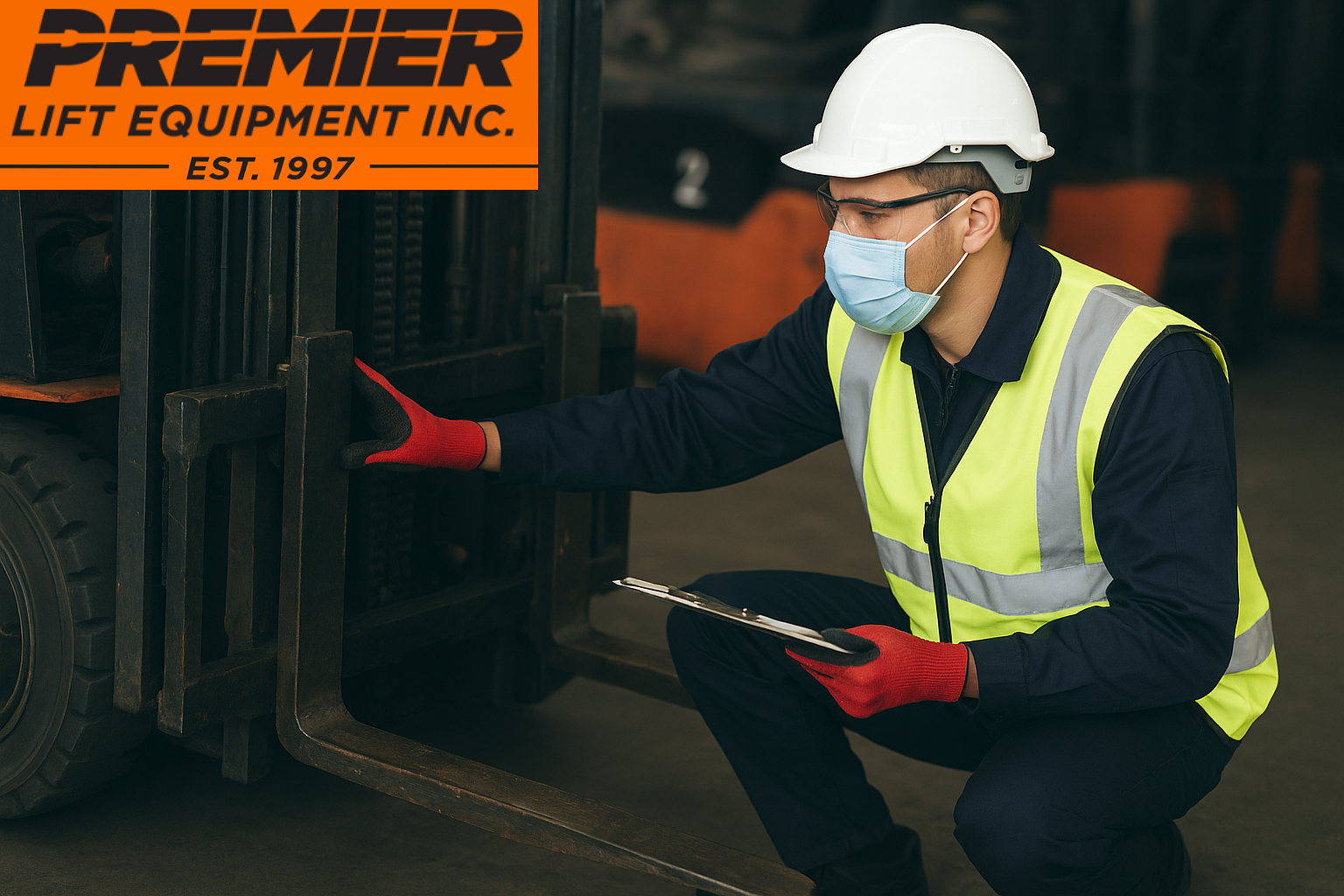
Forklifts move thousands of pounds every day—yet most operators rarely think about the condition of the forks themselves. The problem? Fork wear is slow, subtle, and dangerous. Even a small amount of metal loss can significantly reduce lifting capacity, increase the risk of dropped loads, and create avoidable safety hazards.
The good news: you don’t need to be a technician to perform a basic fork wear inspection. A few minutes is enough to identify red flags before they become expensive or dangerous failures.
Why Fork Wear Matters More Than You Think
Forks don’t fail suddenly—they wear down over time. As the heel of the fork thins, the truck’s lifting capacity decreases. According to industry standards, just 10% wear equals a 20% reduction in capacity, putting operators and products at risk.
Ignoring fork wear leads to:
- Load shifts and dropped pallets
- Overstressed mast components
- Premature chain, carriage, and roller wear
- Safety violations during audits
A simple inspection can prevent all of that.
Step 1: Check the Fork Heel for Wear
The heel—the curved transition between the horizontal blade and the vertical shank—is the most common wear point. It drags, scrapes, and carries the heaviest load.
Look for:
- Rounding or thinning of the heel
- Deep gouges or grinding marks
- Sharp edges that shouldn’t be sharp
- Metal flaking or stress patterns
If the heel looks noticeably thinner than the rest of the blade, it’s time for a formal measurement.
Step 2: Compare Blade Thickness to the Original
This is the most important test.
Use calipers or a fork wear gauge to measure:
- The thickness of the fork at the heel
- The thickness of the fork further down the blade (the unworn area)
If the heel is 10% thinner than the blade, the fork must be replaced immediately per ANSI/ITSDF B56.1 standards.
Rule of thumb:
5% wear = monitor closely
7–9% wear = approaching replacement
10%+ wear = unsafe and non-compliant
Step 3: Inspect for Bends and Alignment Issues
Forks must be straight and aligned to lift safely. Even a slight bend can overload one fork and weaken lifting capacity.
Check for:
- One fork sitting higher than the other
- Fork tips not aligning
- Side-to-side twist
- A visible bend when sighting down the blade
If anything looks off, the forks need professional evaluation.
Step 4: Check the Locking Pins and Hooks
Even perfectly thick forks can be unsafe if they are not securely attached.
Confirm that:
- Locking pins engage fully
- Hooks fit securely on the carriage
- There is no excessive movement or play
- Retainers aren’t cracked or worn
Loose forks = unpredictable loads.
Step 5: Look for Cracks and Surface Damage
Cracks, no matter how small, are immediate red flags.
Inspect:
- The heel radius
- The welds near the shank
- The blade surface
- The fork tips
Rust bubbles, stress lines, or visible cracks all require immediate removal from service.
Need Help Balancing Fork Replacements vs. Equipment Budget? Identifying worn forks and maintaining compliance with safety standards is critical, but managing overall equipment replacement costs is just as important. Explore our tiered inventory starting with our Budget Forklifts & Chassis-Only Hub.
When to Replace Your Forks
You should replace forks if:
- Heel wear reaches 10%
- The forks are bent or misaligned
- Locking mechanisms are damaged
- Cracks are present anywhere
- The forks fail any ANSI inspection criteria
Forks are inexpensive compared to the cost of a dropped load or failed safety audit.
Make Fork Inspection Part of Your Routine
A quick fork check takes less than two minutes and can prevent major hazards. Whether you manage a fleet or a single forklift, regular inspections ensure:
- Safer lifts
- Longer equipment life
- Fewer unexpected failures
- Compliance with safety standards
If you're unsure about fork condition, Premier Lift can perform a full fork and attachment inspection or measure wear during your next PM visit.
Need New Forks or an Inspection?
Premier Lift offers:
- OEM and aftermarket forks
- Custom lengths and capacities
- On-site fork wear measurements
- Complete safety inspections
Stay safe. Protect your equipment. Don’t let fork wear put your team at risk.
Explore Inspection-Ready & CSA-Certified Categories
If your annual safety checks reveal excessive fork wear or structural defects, Premier Lift can help you determine the correct replacement equipment or parts matching your facility requirements:
- CSA-Certified Counterbalances & Reach Trucks: Fully inspected, data-plate verified, and audit-ready.
- Replacement Attachments & Parts Support: Keep your fleet compliant with certified components.
Need Help Selecting the Right Forklift?
Our material handling specialists can help identify the correct equipment and safety solution for your facility.
✅ Call Our Brampton Team Directly