
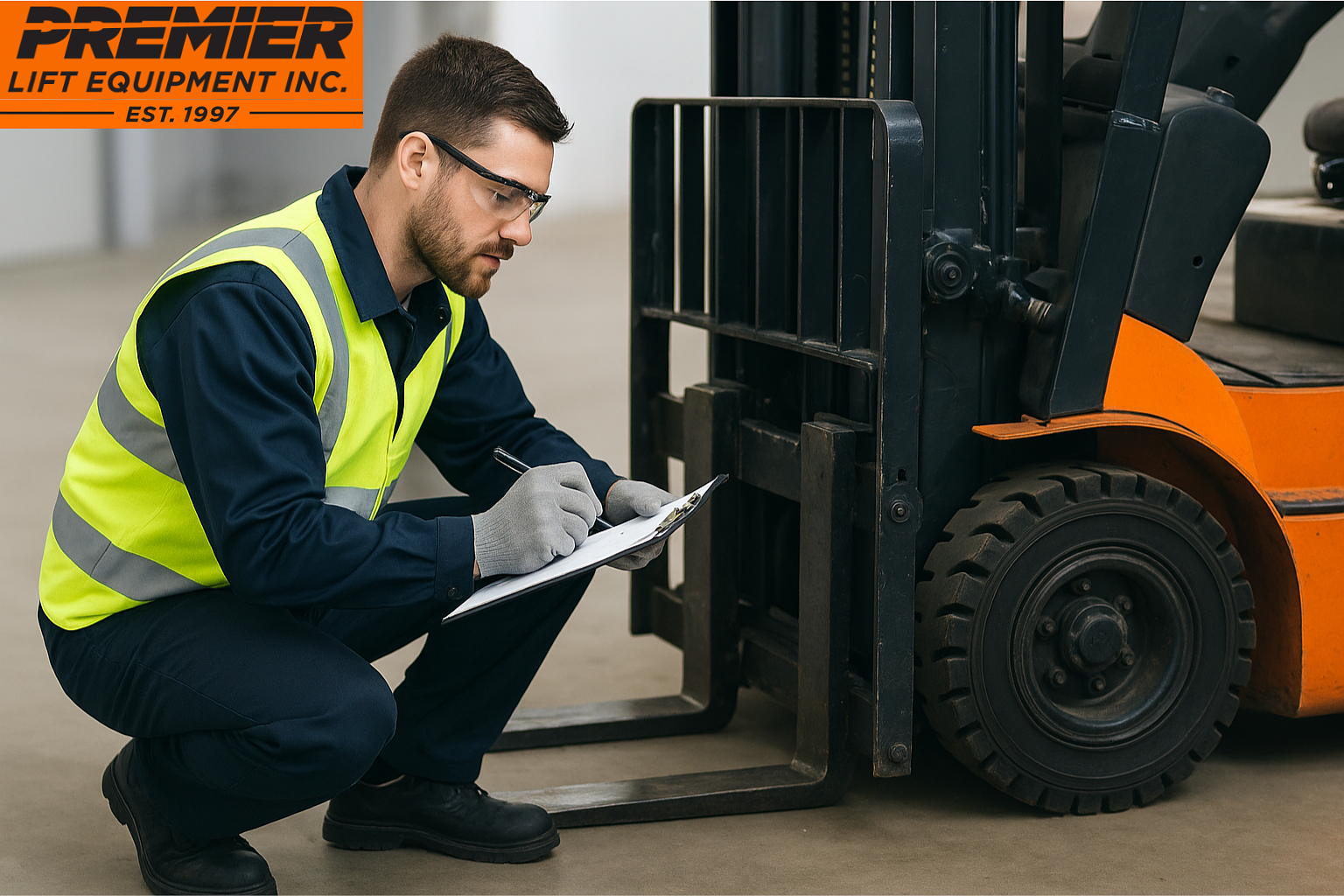
Forklifts are built to be durable workhorses—but even the best-maintained equipment eventually reaches a point where repairs stop making financial sense. Many operations end up sinking money into aging trucks simply because replacement feels like a larger upfront cost. In reality, waiting too long to replace a forklift can quietly drain budgets, slow productivity, and increase safety risks.
Here’s a clear, practical guide to knowing when a forklift should be replaced rather than repaired.
1. When Repair Costs Start Exceeding the Truck’s Value
A general industry rule:
If a single repair is more than 50% of the forklift’s current value, it’s not worth doing.
That includes major failures like:
- Engine rebuilds
- Transmission failures
- Hydraulic system overhauls
- Full mast replacements
- Control system failures on electric units
If the truck is already past mid-life (8,000–12,000 hours), these expensive repairs often don’t deliver enough operational lifespan to justify the spend.
Pro tip: Ask your dealer for the unit’s estimated market value before approving major repairs.
2. When the Forklift Is Down More Often Than It’s Running
A forklift that breaks down frequently—even for “small” issues—is a hidden cost center. Frequent downtime can mean:
- Missed shipping windows
- Lost operator hours
- Rental costs to cover downtime
- Technician call-out charges
- Disrupted workflows across teams
If your maintenance logs show recurring service calls for the same components, the truck is likely reaching the end of its useful life.
Rule of thumb:
If a forklift is generating two or more unplanned service calls per month, it should be evaluated for replacement.
3. When Parts Availability Becomes a Problem
As forklifts age, sourcing OEM parts becomes more difficult and expensive—especially for discontinued models. Long lead times mean:
- Days (or weeks) of downtime
- Patchwork repairs using aftermarket components
- Inconsistent performance
If you are routinely told “that part is on backorder,” the financial and operational impact of waiting often outweighs the cost of upgrading.
4. When the Forklift No Longer Meets Your Operational Needs
Your business evolves—your equipment should too.
Replace instead of repair when:
- The lift height no longer matches racking systems
- You need a narrower aisle footprint
- Battery performance can’t meet longer shift requirements
- Emissions standards have changed
- Your industry (like pharma or food) requires CSA or hygiene-specific specifications
If the truck can’t perform to the level your operation now requires, repairing it simply prolongs the mismatch.
5. When Safety Concerns Start to Increase
Older forklifts can develop structural or functional issues that compromise safety:
- Excessive mast sway
- Worn forks or damaged carriage plates
- Declining braking performance
- Steering issues
- Frame rust or fatigue
- Electrical inconsistencies
If the forklift is creating safety concerns—even minor ones—replacement should be prioritized. Safety risks carry significantly higher costs than any new equipment purchase.
6. When the Operating Costs Outweigh the Monthly Payment of a Newer Unit
Modern forklifts are more:
- Energy-efficient
- Reliable
- Ergonomic
- Cost-efficient to maintain
For many operations, the monthly cost of repeated repairs ends up higher than a rental or lease payment on a newer, more reliable unit.
When repair costs consistently exceed $300–$500 per month on average, it’s time to compare that to a rental or lease alternative.
7. When Your Fleet Management Strategy Prioritizes Predictability
More businesses are shifting to predictive maintenance and lifecycle-based fleet strategies. This means retiring trucks:
- Before they reach high-hour risk zones
- Before major rebuilds hit
- When replacement value is highest
- When uptime can be guaranteed
Replacing proactively—not reactively—keeps operations stable, costs predictable, and downtime minimal.
Conclusion: Replacement Isn’t a Cost—It’s a Cost-Control Strategy
Knowing when to replace a forklift is ultimately about safeguarding productivity, safety, and operational efficiency. When repair frequency, rising costs, or operational mismatches begin to stack up, replacement becomes the smarter, more cost-effective choice.
Need help evaluating whether to repair or replace?
Premier Lift Equipment provides unbiased fleet assessments, CSA-certified forklifts, and flexible rent-to-own and new equipment options tailored to your operation.
👉 Contact Premier Lift Equipment today to schedule your evaluation.