
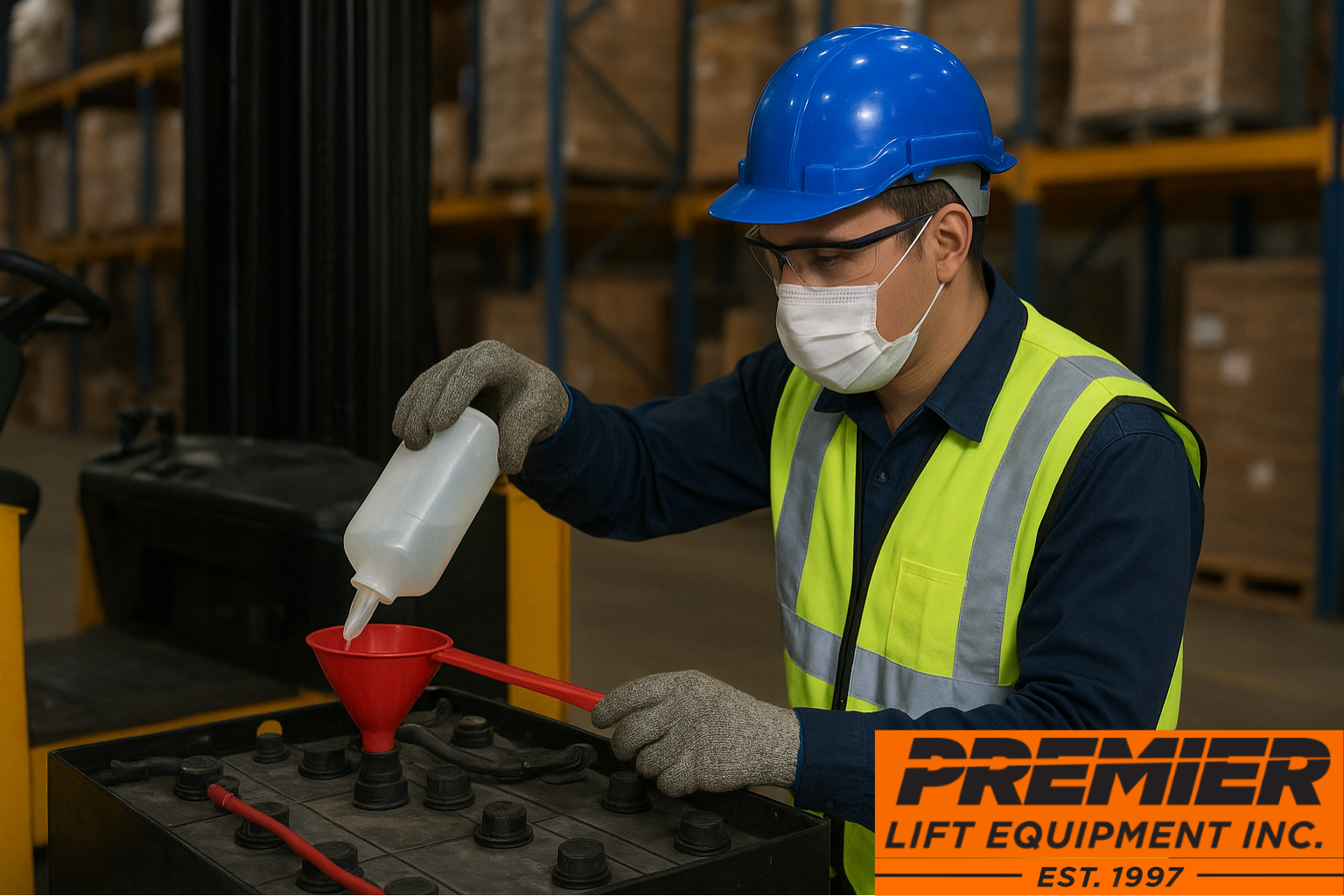
When it comes to keeping your electric forklift running at peak performance, few maintenance tasks matter more than proper battery watering. Yet it’s one of the most commonly overlooked responsibilities in warehouses and distribution centers. A battery that isn’t watered regularly can lose capacity, overheat, and fail long before its expected lifespan—costing you thousands in repairs or premature replacements.
The good news? Watering doesn’t have to be complicated. With the right habits and a few affordable add-ons, you can protect your battery investment and keep your fleet operating smoothly for years.
Why Watering Your Forklift Battery Matters
Flooded lead-acid forklift batteries rely on a mixture of sulfuric acid and water to create the chemical reaction that produces power. During normal use and especially during charging, water naturally evaporates or breaks down, lowering the fluid level in each cell.
If water levels drop too low, several problems start to occur:
- Plates become exposed, causing permanent sulfation and capacity loss
- Heat builds up, increasing battery wear
- Charging becomes less efficient, leading to downtime
- Battery lifespan shortens significantly
On the other hand, a well-watered battery maintains its internal balance, runs cooler, and can deliver years of dependable service.
How Often Should You Water a Forklift Battery?
A general rule:
Check water levels every 5–10 charging cycles—usually once a week for most operations.
But watering too frequently can also cause issues, leading to overflow and corrosion. That’s why consistency and accuracy matter.
Make Battery Watering Easy with a Watering System
If you want to take the hassle out of battery maintenance, a single-point watering system is one of the smartest upgrades you can make.
Benefits of a Watering System
- Fast and foolproof – Fill all cells at once in under a minute
- Prevents overfilling – Automatic shutoff caps stop excess water
- Reduces labour time – No more checking each cell individually
- Extends battery life – Ensures optimal water levels every time
For multi-shift or high-usage operations, this can save hours of labour every month—and dramatically reduce battery-related issues.
Add a Blinkie Light to Remove All the Guesswork
A water-level indicator (often called a Blinkie light) is another small but powerful tool. It sits on the top of the battery and flashes green when levels are good—or red when it’s time to add water.
Why a Blinkie Helps
- No need to open the battery to check levels
- Instant visual status, visible from across the warehouse
- Prevents premature watering and unnecessary labour
- Reduces risk of dry cells, the number one cause of early failure
A Blinkie plus a watering system is the simplest—and safest—battery maintenance solution for most operations.
Best Practices to Maximize Battery Life
To keep your forklift batteries in top condition:
- Always water after charging, never before
- Use distilled water when possible
- Keep battery tops clean and dry
- Have operators trained to notice early warning signs
- Schedule regular PMs to catch issues early
These small habits go a long way in protecting your investment.
Final Thoughts
Watering your forklift battery isn’t just maintenance—it’s insurance. A consistently watered battery performs better, lasts longer, and reduces downtime. And with simple tools like watering systems and Blinkie lights, proper care becomes almost effortless.
Ready to extend the life of your forklift batteries?
👉 Request a quote for battery watering systems
👉 Ask about Blinkie light installations
👉 Browse our lineup of new and certified pre-owned forklifts