
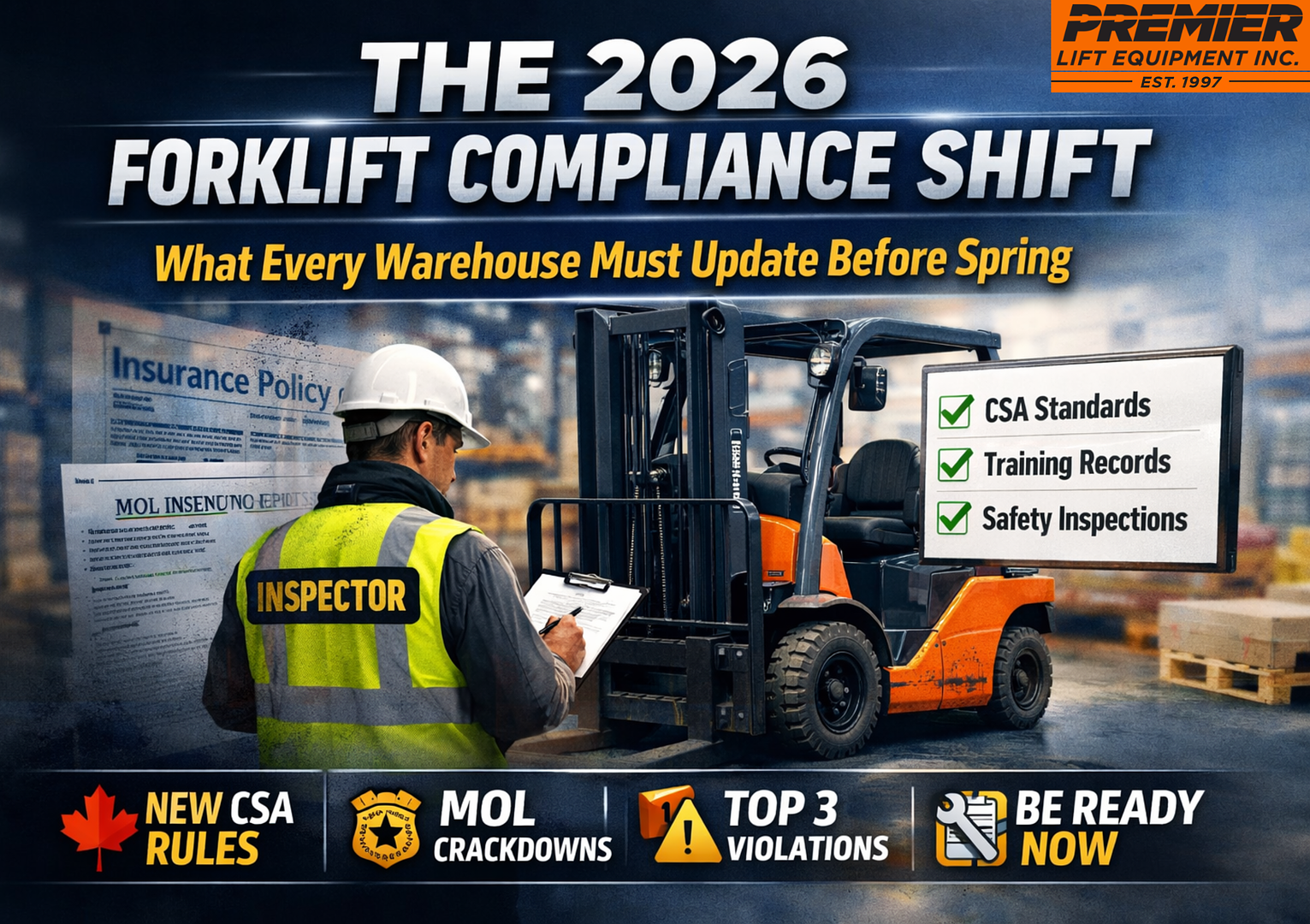
As we move into 2026, warehouse operators across Canada are facing a new reality: forklift compliance is tightening. Updates to CSA standards, more active inspection cycles from the Ministry of Labour (MOL), and stricter insurance requirements mean many facilities may no longer meet the expectations regulators and insurers now have.
The challenge? Most operators know things are changing, but few have a clear roadmap for what actually needs to be updated.
This guide breaks down the most important forklift compliance priorities for 2026, what inspectors are focusing on, and the practical steps every warehouse should take before spring.
Why Forklift Compliance Is Tightening in 2026
Across Canada—and particularly in Ontario—regulators and insurers are responding to a clear trend: incidents involving powered lift trucks remain one of the most common workplace safety risks in industrial environments.
In response, enforcement agencies are placing greater emphasis on three areas:
- Equipment condition and safety systems
- Operator training and certification
- Inspection and maintenance documentation
Many warehouses assume they are compliant because they passed inspections in previous years. However, 2026 enforcement is focusing less on minimum compliance and more on documented proof of safe operations.
The 2026 Compliance Changes That Matter Most
While regulations themselves evolve gradually, how they are enforced is shifting quickly. Inspectors are looking deeper into operational practices and documentation rather than just surface-level compliance.
Here are the areas warehouses should be reviewing now.
1. Documented Pre-Shift Inspections
Inspectors increasingly expect to see documented daily forklift inspections, not just confirmation that checks are being performed.
Operators should be completing recorded inspections covering:
- Fork condition
- Mast and chains
- Brakes and steering
- Tires
- Hydraulic systems
- Warning lights and alarms
If documentation cannot be produced during an inspection, the inspection is often treated as if it never occurred.
2. Updated Operator Training and Refresher Programs
Another area receiving increased scrutiny is operator certification records.
Inspectors may request documentation showing:
- Initial forklift certification
- Refresher training records
- Site-specific training procedures
Best practice is refresher training every three years, or sooner if there has been an incident, equipment change, or significant workplace layout change.
3. Equipment Safety Systems and Overall Condition
Forklift condition is another key enforcement area in 2026.
Inspectors are focusing on whether equipment safety systems are present, functional, and properly maintained.
Common inspection points include:
- Seatbelt functionality
- Backup alarms
- Safety decals and load capacity plates
- Tire condition
- Hydraulic leaks
- Mast and fork integrity
Units with missing or malfunctioning safety components are frequently tagged out of service until repairs are completed.
The Top 3 Forklift Violations Trending Across Ontario & Canada
Based on industry service trends and enforcement activity, three issues are appearing consistently across warehouses.
1. Missing or Incomplete Inspection Logs
Many facilities perform forklift checks but fail to maintain consistent documentation, creating a compliance gap during inspections.
2. Expired or Incomplete Operator Training
Operators who were trained years ago without refresher programs remain one of the most common compliance issues.
3. Poorly Maintained Equipment
Worn tires, hydraulic leaks, damaged forks, and missing safety devices continue to be some of the most frequently cited issues.
These violations are preventable, but they require consistent maintenance practices and clear documentation systems.
How to Prepare Your Warehouse Before Spring
The most effective way to stay ahead of compliance issues is to treat forklift safety as an ongoing system rather than a checklist.
Here are four steps warehouses should take now.
1. Conduct a Fleet Compliance Audit
Review every forklift in your facility to confirm:
- Safety systems are operational
- Tires and forks meet safety requirements
- Warning systems are functioning
If equipment is nearing the end of its service life, replacement may be safer and more cost-effective than continued repairs.
2. Verify Operator Certification Records
Ensure all operators have:
- Valid certification documentation
- Refresher training where required
- Site-specific forklift training procedures
Maintaining organized records makes inspections significantly easier.
3. Implement Documented Daily Inspections
Inspection records should be easy to retrieve during an inspection.
Many warehouses are transitioning to:
- Digital inspection tracking
- Logged inspection sheets
- Supervisor sign-off systems
Consistency is key.
4. Schedule Preventative Maintenance
Routine preventative maintenance helps reduce both compliance risks and unexpected downtime.
Service programs should include:
- Hydraulic system inspections
- Brake system checks
- Chain lubrication and wear checks
- Battery or engine system maintenance
Why CSA-Ready Equipment Reduces Risk and Cost
One of the most effective ways to reduce compliance risk is ensuring your forklifts meet current CSA safety expectations.
CSA-ready equipment helps warehouses avoid issues such as:
- Missing safety systems
- Outdated warning devices
- Incorrect load capacity labeling
- Non-compliant modifications
More importantly, modern equipment reduces the likelihood of workplace incidents, which protects both employees and operations.
For many facilities, upgrading older equipment is not just about productivity—it’s about reducing regulatory and insurance exposure.
Forklift compliance in 2026 is no longer just about passing inspections. Regulators and insurers now expect documented, proactive safety systems inside every warehouse.
Facilities that stay ahead of these expectations benefit from:
- Fewer compliance violations
- Lower operational risk
- Reduced downtime
- Safer working environments
Warehouses that wait until inspectors arrive often discover problems when it’s already too late.
Preparing Your Fleet for 2026
If you're unsure whether your forklifts, operators, and inspection procedures meet current expectations, it's worth reviewing your systems before enforcement cycles increase this spring.
From fleet inspections and compliance audits to CSA-ready equipment, having the right support in place can help ensure your warehouse remains productive, safe, and inspection-ready.
👉 View our CSA certified listings here!