🕒 Updated November 7, 2025
The Hidden Cost of “Run It Until It Breaks”
A lot of operations treat forklifts like they’re unbreakable — run them nonstop until something fails… then deal with the damage.
The problem?
Breakdowns cost 3–5× more than scheduled maintenance.
Not because the labour cost is higher, but because reactive repairs lead to:
- Emergency service callout fees
- Rush shipping for parts
- Extra parts needing replacement due to secondary damage
- Downtime and missed production
From our service data and parts replacement logs, facilities that operate reactively spend up to 40% more per year on parts than those with a planned maintenance program.
1. Planned Maintenance Catches Wear Before It Turns Expensive
Small adjustments and inspections prevent large failures.
For example:
- A simple chain adjustment can prevent costly mast repairs.
- A hydraulic oil inspection can prevent cylinder scoring and pump damage.
- Replacing a worn steer tire early prevents damage to steer axles and bearings.
- Monitoring battery water levels prevents battery failure.
Here’s the key:
Failing components rarely fail alone.
One neglected part triggers a chain reaction of damage.
Planned maintenance stops that cascade before it starts.
2. PM Extends the Life of Major Components
Forklifts follow predictable wear cycles — chains stretch, hydraulic oil breaks down, motors accumulate dust.
When PM is done regularly:
- Chains last significantly longer
- Hydraulic systems stay clean and protected
- Motors run cooler and more efficiently
Customers on consistent PM schedules typically extend the life of critical components by 30–50%.
That means fewer replacements, lower parts spend, and no surprise failures.
3. You Spend Budget Intentionally — Not Reactively
Planned maintenance turns spending into scheduled, predictable events.
Instead of a sudden $3,000 repair disrupting your month, PM allows you to:
- Forecast parts wear
- Plan purchases and approvals
- Avoid overnight shipping and emergency service charges
As one CFO described it:
“It’s the difference between financial planning and financial panic.”
4. PM Makes Technicians Accountable to Your Equipment
When the same technician services the same forklift regularly, they learn:
- How the truck is used
- The environment it operates in
- Early-warning signs specific to that unit
It’s like assigning a personal mechanic to your forklift.
They don’t just fix problems — they prevent them.
5. The Data: PM Reduces Parts Spend by Up to 40%
From internal fleet analysis:
- Facilities with reactive maintenance spend significantly more on parts annually.
- Facilities on a 3-month PM schedule reduce their parts spend by 28–40%.
Planned maintenance isn’t a cost.
It’s a cost-reduction strategy.
Bottom Line
Planned maintenance isn’t about oil changes.
It’s about:
- Extending component life
- Reducing parts spend
- Eliminating budget surprises
- Improving uptime and productivity
Avoiding just one major breakdown can pay for an entire PM program for the year.
Ready to reduce your parts spend?
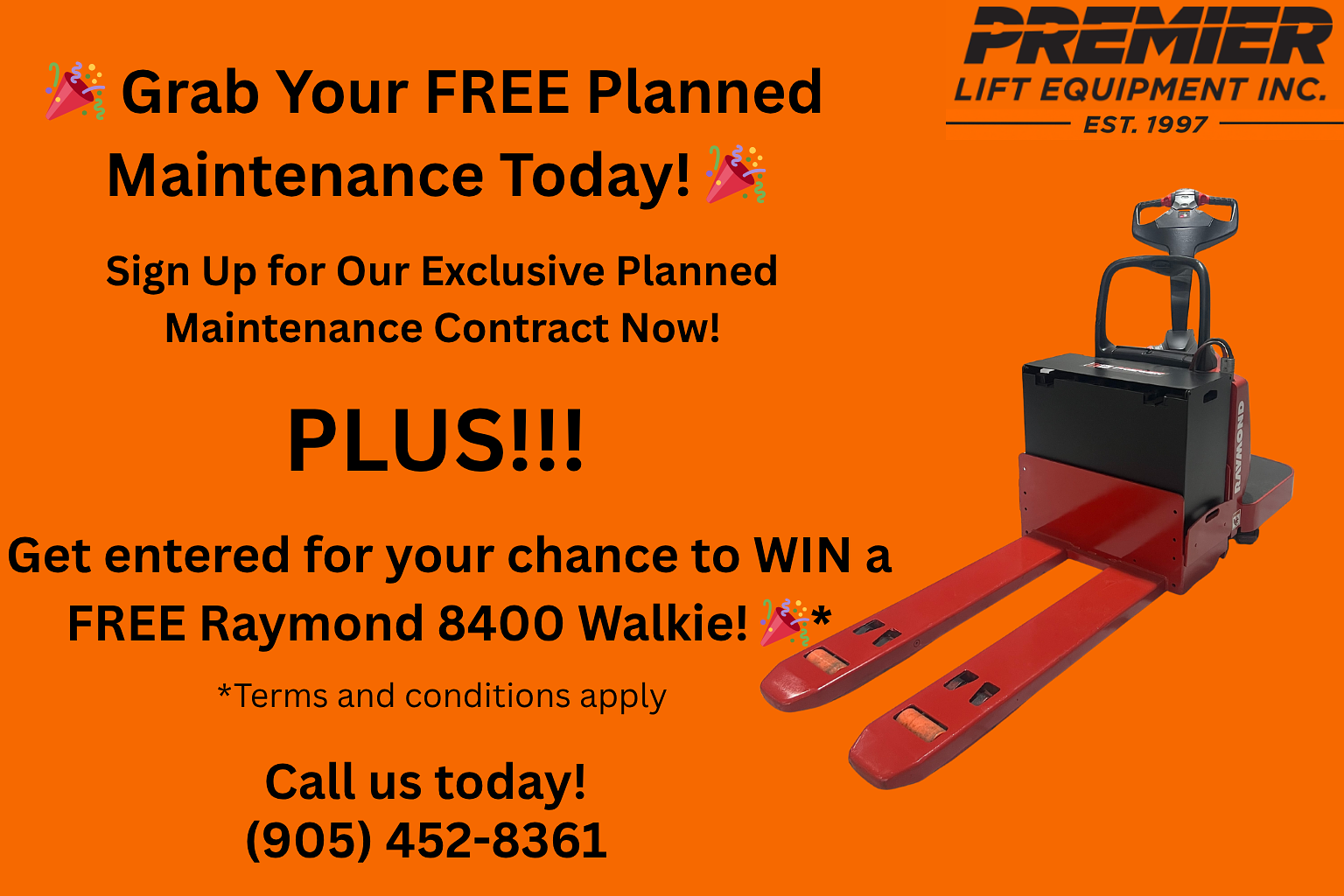
👉 Get a free planned maintenance when you sign up this month.
(Plus be entered to win a Raymond walkie.)
👉Read more about which parts are most likely to fail and how to prevent downtime.