
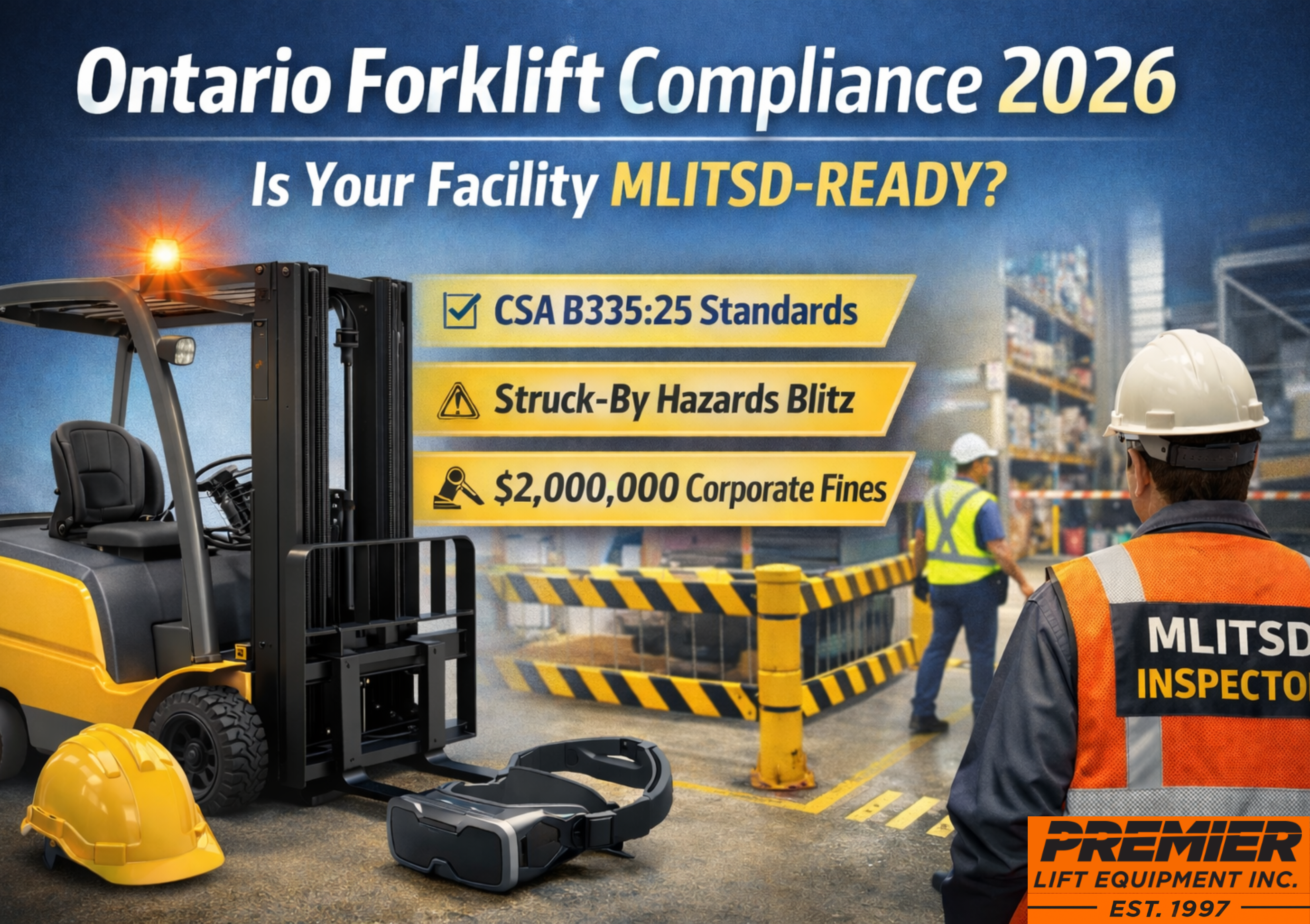
 CSA B335:25 is reshaping expectations for forklift safety, with increased focus on documentation, training, and equipment condition. Under the Working for Workers Act, corporate fines can reach up to $2,000,000, making compliance a financial priority—not just a safety one. The MLITSD is actively enforcing “Struck-by” hazards and Pedestrian Traffic Management in its current blitz, with heightened inspections through March 31.
Compliance Fails Start With Culture, Not Equipment
The biggest gap I see in most warehouses isn’t equipment condition — it’s the lack of a real documentation culture. Operators rush through pre‑shift checks, skip post‑shift inspections, or don’t feel comfortable reporting issues. When people are afraid to speak up, small problems turn into compliance failures. A safe operation starts with communication, transparency, and a team that feels supported enough to report the truth.
Why 2026 Compliance Looks Different
Forklift compliance in Ontario is no longer about simply “passing inspection.” In 2026, enforcement from the Ministry of Labour, Immigration, Training and Skills Development (MLITSD) is focused on proof of safe systems—not just equipment condition.
The shift toward CSA B335:25 reflects a broader move toward:
- Documented safety procedures
- Ongoing operator competency
- Clear separation between equipment and pedestrian traffic
Warehouses that fail to adapt aren’t just risking downtime—they’re exposing themselves to significant financial penalties and liability.
What I Look for the Moment I Walk Into a Facility
When I walk into a warehouse during a compliance conversation, I’m immediately looking for the things that tell the real story:
- Are operators actually doing pre‑ and post‑shift inspections?
- Are there photos documenting damage or wear?
- Are walkways respected or ignored?
- Do supervisors know what’s happening on the floor?
- Do operators feel safe reporting issues?
- You can tell in the first five minutes whether a facility is compliant — long before you ever look at a forklift.
The 2026 “Blitz” Breakdown: What Inspectors Are Targeting Right Now
The MLITSD is currently running a focused enforcement campaign targeting two high-risk areas:
1. Struck-By Hazards
This includes:
- Poor visibility around corners or racking
- Lack of warning systems (lights, alarms)
- Unsafe forklift operation near workers
2. Pedestrian Traffic Management
Inspectors are looking for:
- Clearly marked walkways
- Physical barriers between forklifts and foot traffic
- Documented traffic flow plans
These are not minor issues—these are top causes of serious workplace injuries, which is why enforcement is aggressive through March 31.
👉 Official campaign details here!
Old Standards vs. 2026 Requirements
Inspection Records
- Old: Paper logs (often inconsistent)
- 2026: Digital logbooks with traceable history
Operator Training
- Old: One-time certification
- 2026: Ongoing competency and refresher tracking
Supervisor Oversight
- Old: General responsibility
- 2026: Documented supervisor competency
Safety Systems
- Old: Basic alarms and lights
- 2026: Enhanced visibility and pedestrian control measures
Training Methods
- Old: Classroom and basic practical training
- 2026: VR-augmented and scenario-based training
Compliance Approach
- Old: Reactive, inspection-based
- 2026: Proactive, system-driven safety programs
Compliance Isn’t About Passing — It’s About Proving
If there’s one thing I wish every warehouse manager understood, it’s this:
MLITSD doesn’t care if your forklift runs — they care if you can prove it’s safe.
CSA B335:25 is built around documentation, competency, and systems. If your logs, photos, training records, and supervisor oversight aren’t airtight, the equipment condition doesn’t matter. Compliance is no longer a checklist — it’s a story your documentation needs to tell.
How to Prepare Your Facility For Spring
1. Audit Your Equipment
Ensure all forklifts:
- Meet CSA standards
- Have functioning safety features
- Show no signs of critical wear
👉 Browse our latest refurbished units here
2. Upgrade Your Documentation
If you’re still using paper:
- Move to digital inspection tracking
- Ensure logs are accessible during inspections
3. Train Beyond Certification
Training is no longer “one and done.”
Your team should have:
- Valid certifications
- Refresher training records
- Site-specific safety procedures
👉 Learn more about our training programs!
4. Implement Traffic Control Systems
This is where most facilities fall short.
You need:
- Clearly marked pedestrian zones
- Physical barriers where possible
- Defined forklift travel paths
5. Stay Ahead with Preventative Maintenance
Routine service ensures:
- Fewer compliance issues
- Lower downtime
- Safer operations
Why CSA-Ready Equipment Matters More Than Ever
Upgrading to CSA-ready forklifts is one of the fastest ways to reduce compliance risk.
Benefits include:
- Built-in safety systems
- Proper labeling and load capacity ratings
- Reduced likelihood of inspection failures
Older equipment may still function—but it often lacks the safety features inspectors now expect to see.
What CSA‑Ready Really Means in 2026
CSA‑ready equipment isn’t just about stickers or labels — it means the truck has:
- Verified load capacity plates
- Updated safety decals and bilingual signage
- Functional alarms, lights, and visibility systems
- Documented maintenance history
- Inspection tags that match your digital logs
- This is the level of detail inspectors expect to see when they walk into your facility.
2026 forklift compliance in Ontario is about systems, not checklists.
- Inspectors are targeting real operational risks
- Documentation is now non-negotiable
- Fines are high enough to impact your entire business
Facilities that act early will:
- Avoid penalties
- Improve efficiency
- Create safer workplaces
Those that don’t will be forced to react—usually at a much higher cost.
Is Your Facility MLITSD-Ready?
If you’re unsure whether your operation meets 2026 expectations, now is the time to find out.
From CSA-compliant equipment to training and service support, having the right systems in place ensures you’re ready before inspectors walk through your door.
Explore CSA‑Certified, Audit‑Ready Solutions
- EE‑Rated Electric Forklifts — For controlled and hazardous environments
- Electric Counterbalance Units — Ideal for mixed warehouse operations
- Reach Trucks — For high‑lift, narrow‑aisle compliance
- VNA / Turret Trucks — For maximum storage density and safety
- Dockstockers / Stand‑Up Riders — For high‑cycle dock operations
Compliance starts with the right systems — and the right equipment.
FAQ
- Q: What is the current MLITSD forklift focus for 2026?
- A: Inspectors are prioritizing "struck-by" risks, equipment maintenance (Section 25(1)(b)), and supervisor awareness training.
- Q: How often is forklift recertification required in 2026?
- A: Every 3 years for theory and practical, but the new CSA B335:25 recommends mid-term evaluations if workplace layouts change.
- Q: What are the fines for non-compliance in Ontario?
- A: Corporations can face up to $2,000,000 per offense under the latest Working for Workers Act amendments.