Warehouses Across the 401 Corridor Are Running Out of Room
Over the past few months, our team has been boots‑on‑the‑ground across the entire 401 corridor — Mississauga, Milton, Brampton, Scarborough. Everywhere we walk, the pattern is identical:
- Inventory is up
- Aisles are tight
- Rents are punishing
- Moves are financially unrealistic
The most common line we hear:
“We’re out of space, but we can’t afford to move.”
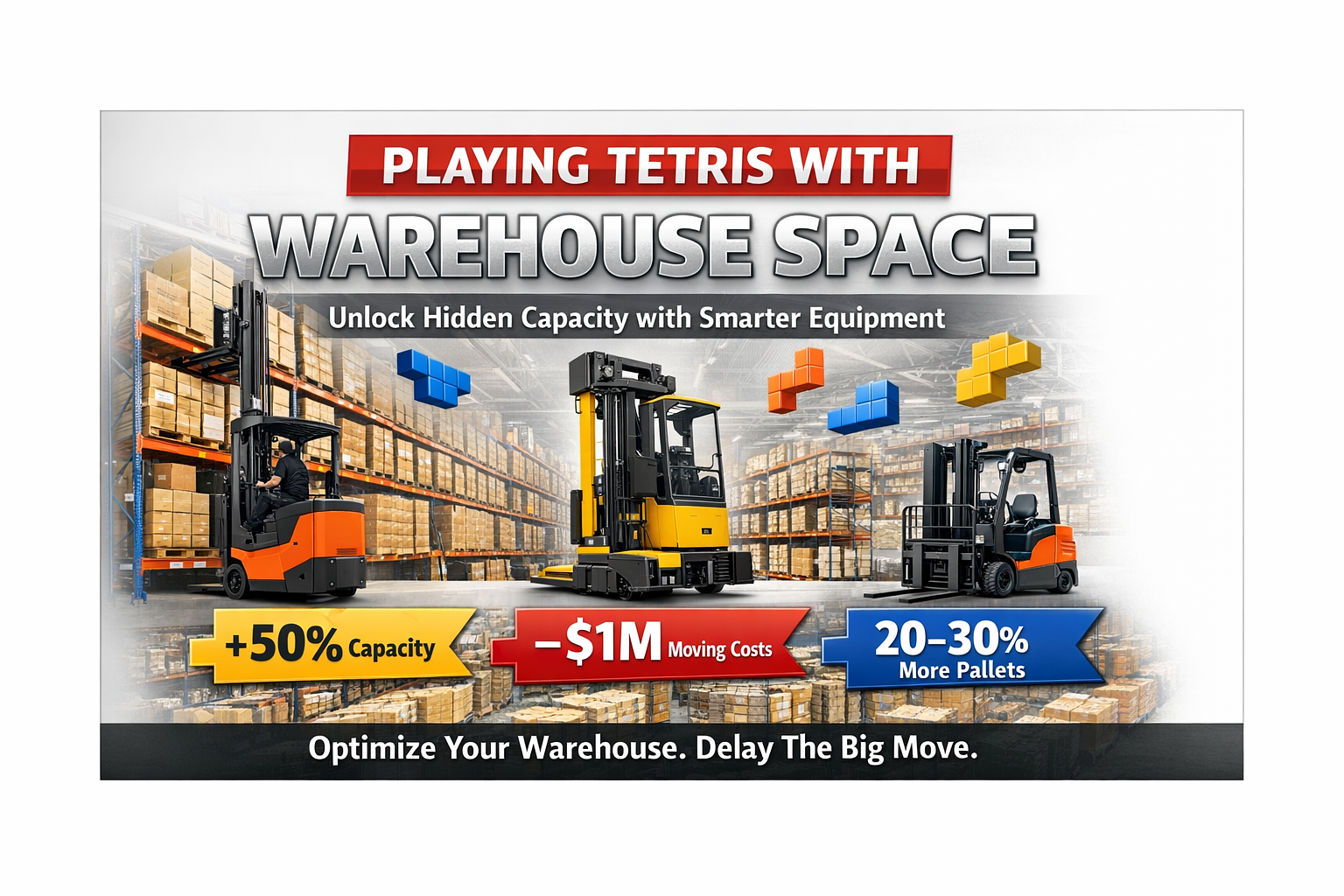
The truth is simple: you don’t need a bigger building — you need smarter equipment that unlocks the space you already have.
1. Counterbalance vs. Reach Trucks: The First Tetris Move
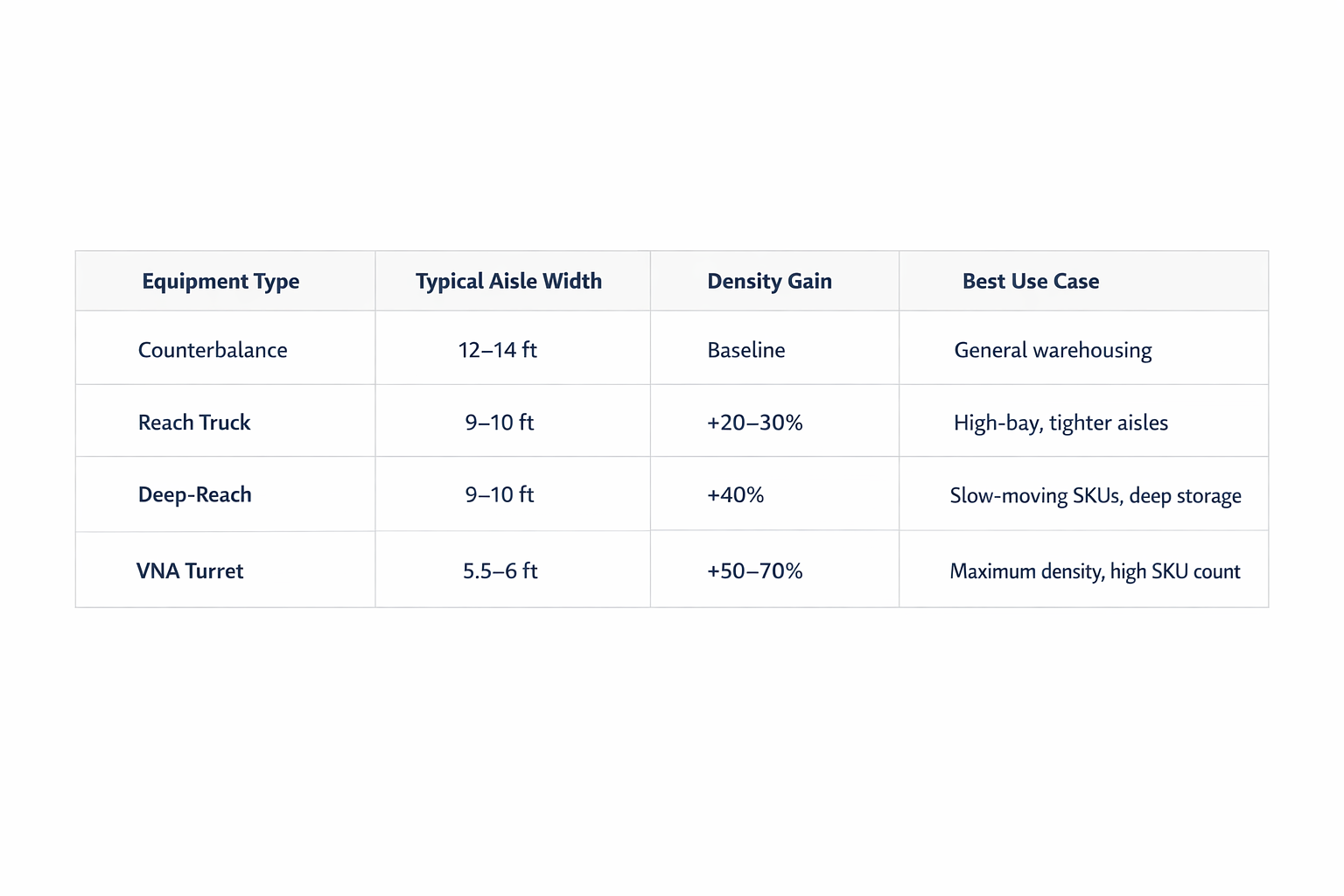
Most GTA warehouses still operate counterbalance forklifts in 12–14 ft aisles. That’s legacy layout thinking.
Switching to a single‑reach or deep‑reach truck shrinks aisles to 9–10 ft, instantly unlocking 20–30% more pallet positions without touching your racking or footprint.
Why it matters:
- Lower aisle width = more rows
- More rows = more pallet positions
- More pallet positions = delayed relocation
Reach trucks typically unlock 20–30% more storage capacity than counterbalance units.
2. Deep‑Reach Forklifts: The Double‑Stack Density Move
Deep‑reach trucks store two pallets deep, increasing density by up to 40%.
This is the “double‑stack” move that buys companies 12–24 months of growth before a lease change becomes unavoidable.
Best for:
- Slow‑moving SKUs
- High‑bay storage
- Facilities with predictable product rotation
Deep‑reach is the fastest way to add 40% more storage without adding square footage.
3. VNA Turret Trucks: The Ultimate Space Multiplier
When maximum density is the goal, VNA (Very Narrow Aisle) equipment is the endgame.
Turret trucks operate in 5.5–6 ft aisles, allowing warehouses to increase capacity by 50–70%.
It’s the closest thing to “finding half a building” inside your existing walls.
Where VNA wins:
- High SKU counts
- High‑bay racking
- Facilities with tight real estate constraints
VNA systems can increase usable capacity by 50–70% — the highest density move available.
4. The Real Math: Equipment Upgrades vs. The $1M Move
A warehouse move in Ontario typically costs $500,000 to $3 million once you factor in:
- Downtime
- Racking teardown
- Racking rebuild
- New lease deposits
- Freight and labour
- Lost productivity
In 2026, the smarter play is staying put — and upgrading equipment to unlock space.
But freight volatility is real. That’s why Premier Lift operates on a Live Landed Costing Model:
- No “sticker pricing”
- No hidden freight surprises
- Every quote reflects this week’s logistics reality
Upgrading equipment is a fraction of the cost of relocating — and avoids a 7‑figure disruption.
5. The Premier Lift Regional Hub Advantage
We don’t just sell what’s sitting on our Brampton floor.
We operate a high‑velocity Regional Inventory Hub across the 401 corridor, giving customers three major advantages:
A. Reduced Double‑Handling
We ship from the closest hub to your site, lowering freight and reducing transit risk.
B. Locked‑In Pricing
Buying from current regional stock protects you from next week’s fuel or shipping spikes.
C. 7‑Layer Technical Audit
Every machine — regardless of which hub it sits in — undergoes our 7‑Layer Technical Audit before delivery.
Regional inventory + real‑time costing = faster delivery, lower freight, and transparent pricing.