
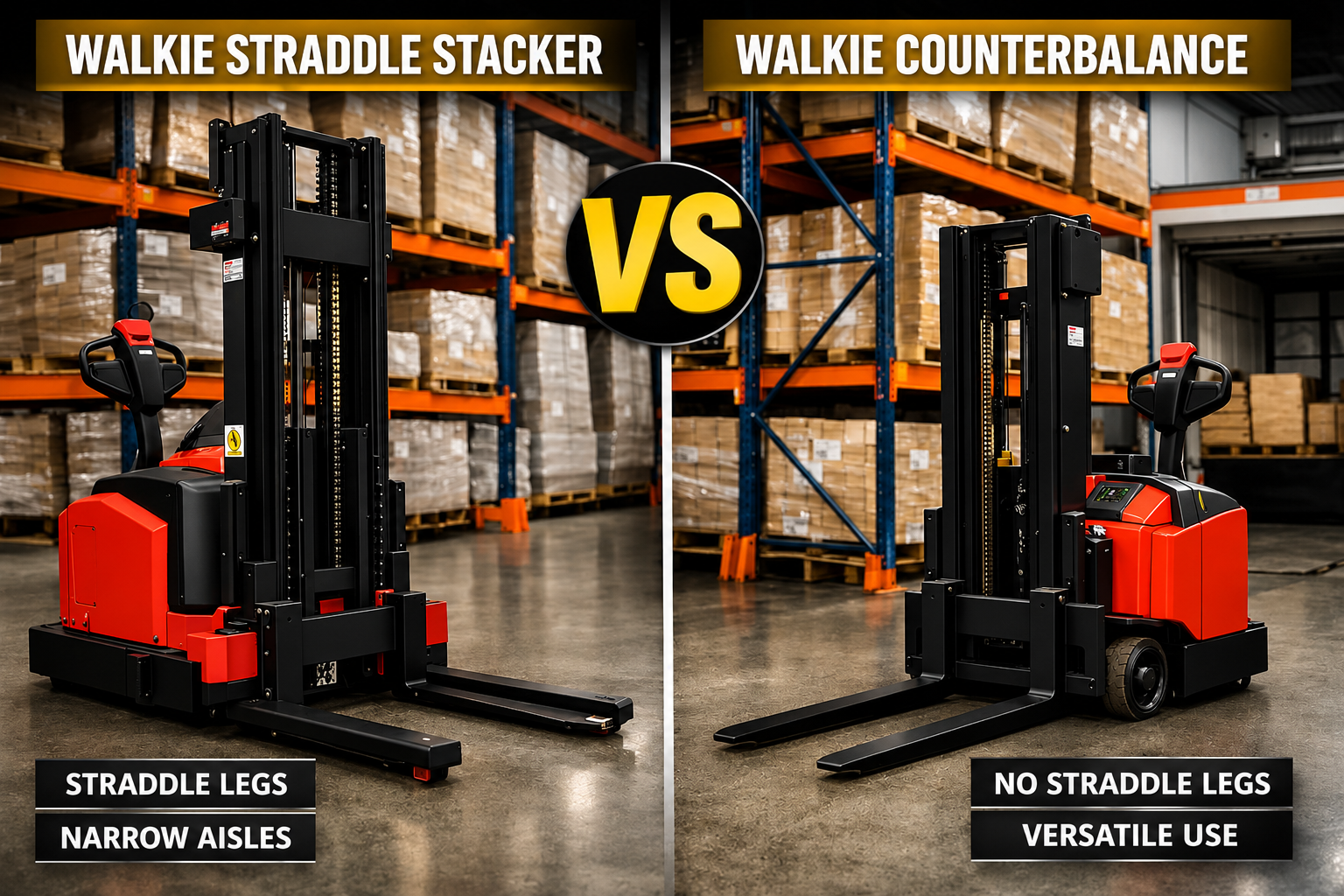
Choosing between an electric walkie straddle stacker and a walkie counterbalance looks simple on paper. In the field, it’s one of the most common places buyers make the wrong call — and it usually comes down to aisle space, racking layout, and how the equipment actually moves under load.
The #1 Mistake: Turning Radius in Real Aisles
A walkie counterbalance needs more space to complete a 90‑degree turn. Buyers underestimate this every day. On a spec sheet, the difference looks small. In a live warehouse, that extra turning radius is the difference between smooth operation and constant fighting with the machine.
If your aisles are tight or your racking rows are close together, a counterbalance walkie can become a problem fast.
View a real example :Lift Dynamics K20 Counterbalance Walkie
Where Straddle Stackers Excel — and Where They Don’t
Straddle stackers are built for narrow aisles and controlled warehouse environments. They’re stable, efficient, and perfect for standard palletized loads. But they have one hard limitation: straddle legs prevent them from entering dock‑level trailers or vans.
If your operation involves loading or unloading trailers, a straddle stacker simply won’t do the job.
See CSA‑Certified Straddle Stackers: Raymond 6210 EE‑Rated Straddle Stacker
Why Counterbalance Walkies Are More Versatile
If you have the space, a walkie counterbalance can handle a wider range of loads and tasks. They bridge the gap between a walkie and a sit‑down or stand‑on counterbalance. Manufacturing floors, shipping and receiving areas, and mixed‑load environments benefit from the flexibility.
But again — only if your layout supports the turning radius.
Browse CSA‑ Certified Walkies & Pallet Jacks:
The Biggest Surprise Cost Buyers Don’t Expect
Battery replacement cost catches buyers off guard more than anything else. Walkie stackers rely heavily on battery health, and a weak or aging battery turns a good machine into a daily frustration. Budgeting for battery condition upfront prevents downtime and unexpected spend.
“Which One Is Better?” — The Real Answer
There isn’t one that’s universally better. It depends entirely on:
- the product you handle
- the space you have available
- the size and weight of your loads
- your application (warehousing, manufacturing, shipping/receiving, etc.)
The right choice is always tied to your environment — not the spec sheet.
The Warehouse Layout Issue That Causes Wrong Equipment Choices
The most common layout problem isn’t the forklift — it’s the racking system.
Beam length, bottom elevation (floor vs load beam), and spacing between rows dictate what equipment can actually function in your aisles. Many buyers choose equipment first and discover layout conflicts later.
A quick layout review prevents thousands in wasted spend.
CSA‑Certified Walkies vs Uncertified Imports
Uncertified imports cost you time and money — repairs, downtime, failed safety certification, and MOL inspection issues. Spending upfront on CSA‑Certified equipment protects your operation and keeps your team moving without surprises.
Learn more about CSA B335 & MOL Compliance:
Final Takeaway
Straddle stackers and counterbalance walkies both have strengths. The right choice comes down to space, load type, and application. When matched correctly, walkies are some of the most efficient tools in any warehouse.
Premier Lift Equipment provides CSA‑Certified walkie stackers and counterbalance units, fully refurbished, documented, and ready for service across Ontario.