
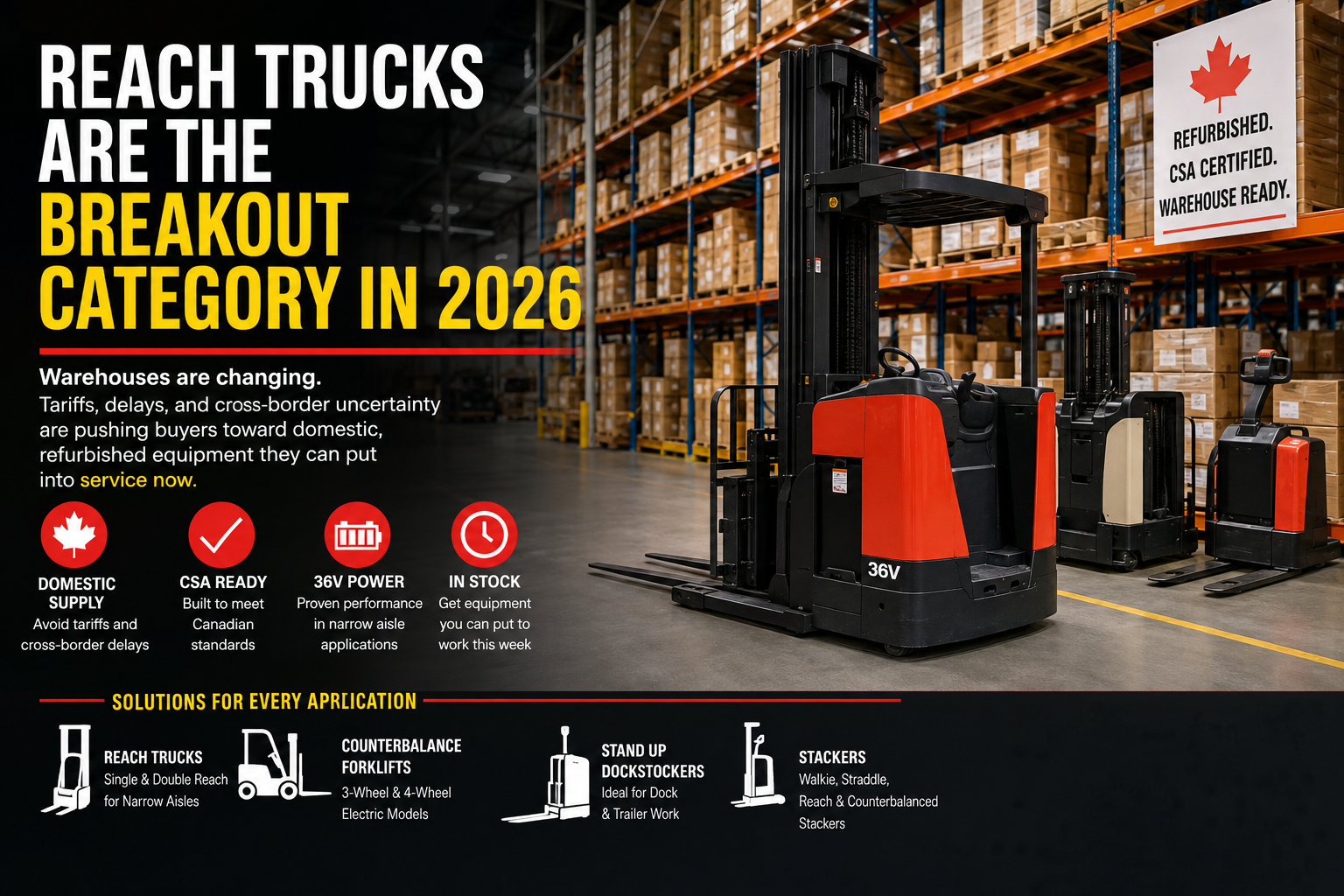
Warehouses are changing how they buy equipment right now. The Canada–USA trade environment has made cross‑border OEM supply unpredictable, and buyers are shifting away from long lead times and tariff‑affected imports. What we’re seeing on the ground is simple: companies want equipment they can put into service this week, not months from now.
That’s why Reach Trucks and Deep‑Reach Forklifts have become the breakout category in 2026. Narrow‑aisle operations are expanding, storage density is tightening, and procurement teams are choosing domestic refurbished reach trucks because they’re CSA‑ready, 36V, and available without cross‑border delays.
Search behavior backs this up. Reach‑truck impressions are climbing, but CTR is suppressed because buyers are comparing models and trying to understand which equipment fits their aisle width, pallet depth, and mast height. When buyers hesitate, it’s usually because they don’t know whether they need single‑reach, double‑reach, or a counterbalance alternative.
This is where refurbished reach trucks make sense. They deliver the same narrow‑aisle performance without OEM volatility, and they slot directly into existing warehouse layouts. For buyers who need alternatives, categories like Electric Counterbalance Forklifts, Stand Up Dockstocker Forklifts, and Stackers help fill gaps where reach trucks aren’t the right fit.
If you’re planning for Q3–Q4, reach trucks are the safest category to invest in. They’re stable, they’re in demand, and they’re exactly what buyers are shifting toward as the market tightens. Domestic refurbished equipment avoids tariff exposure, avoids cross‑border delays, and keeps operations moving while the supply chain resets.