
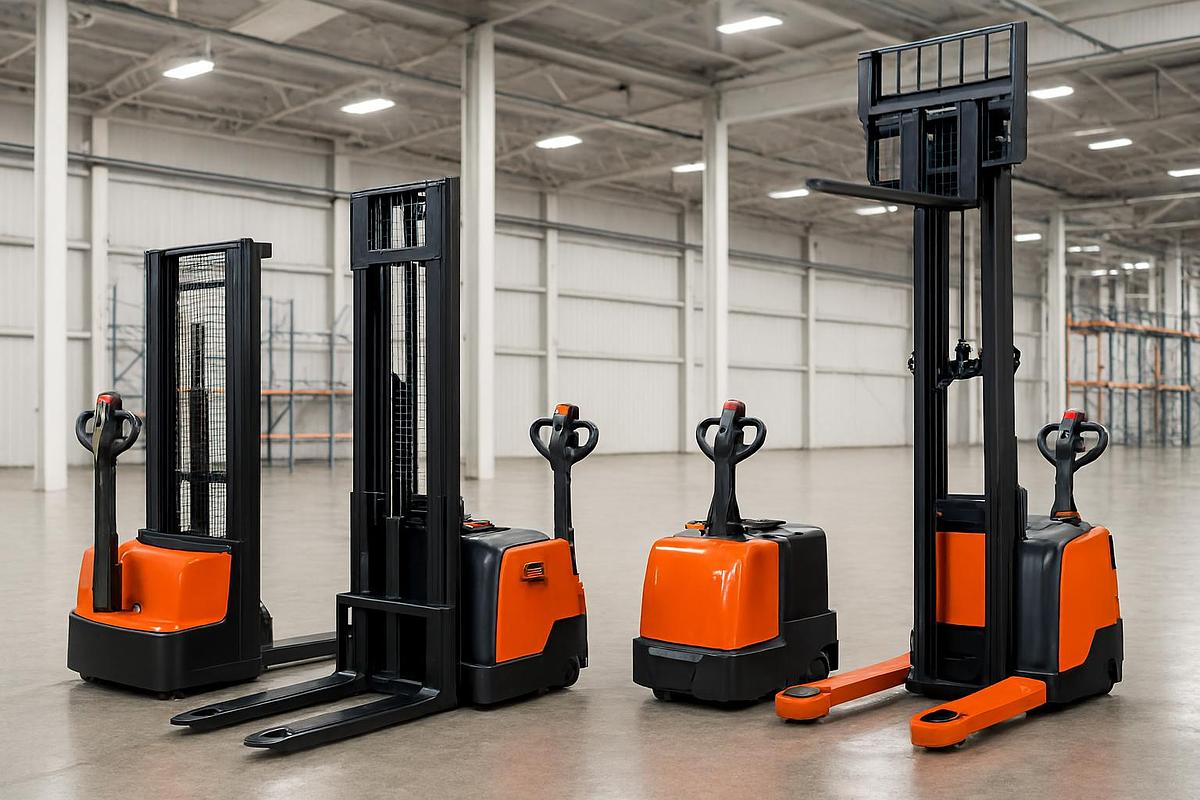
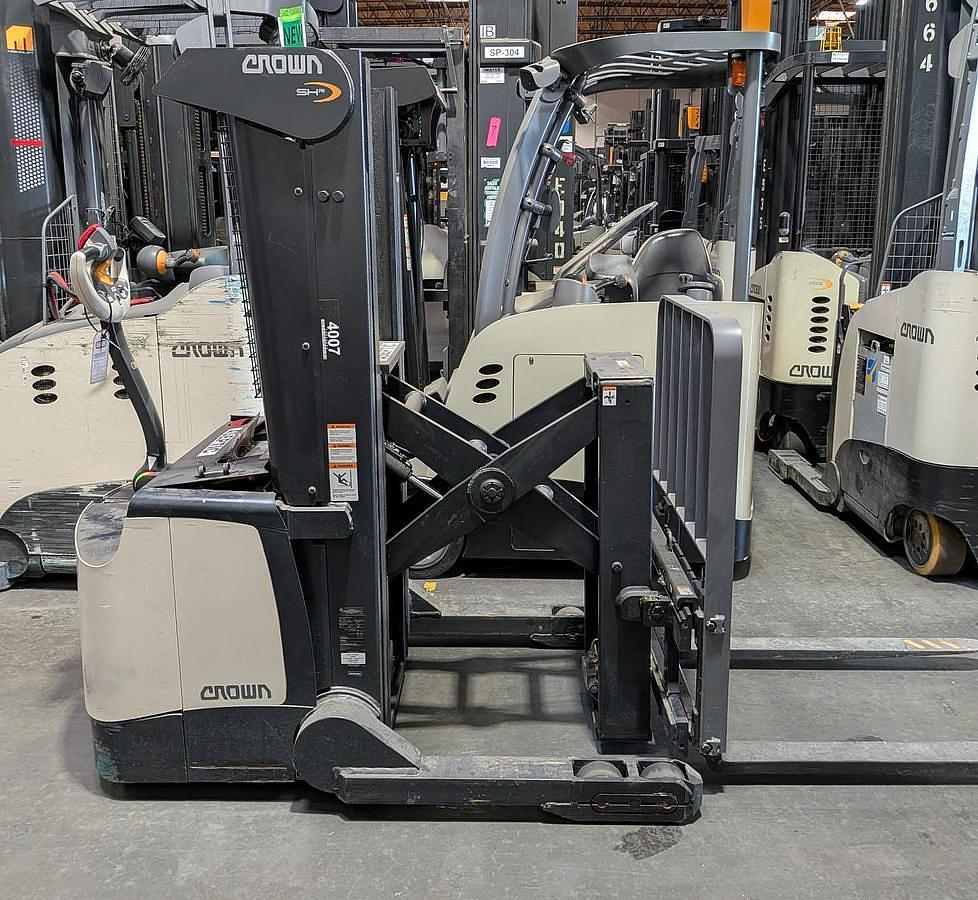
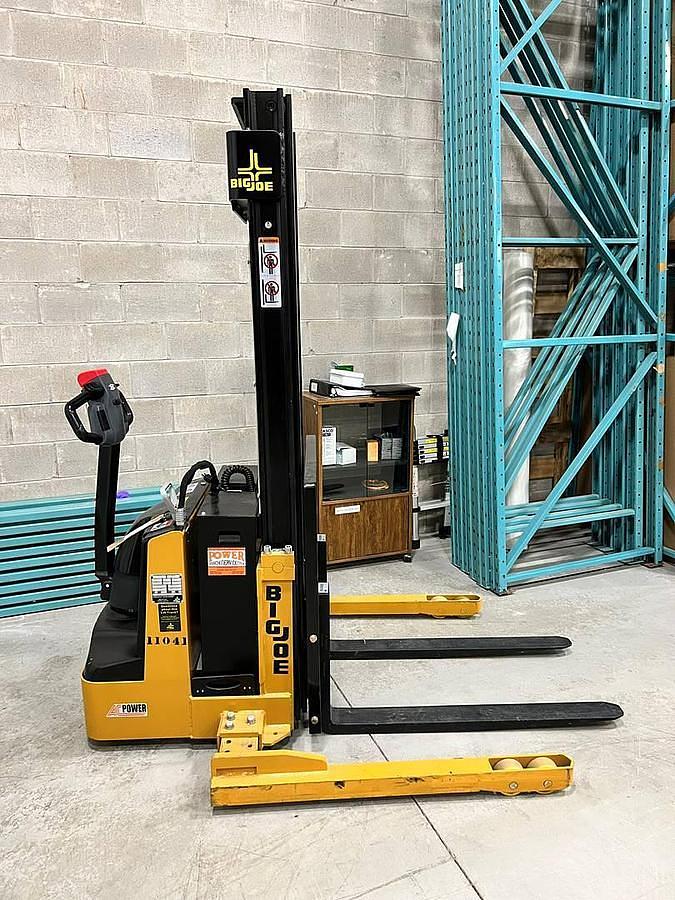
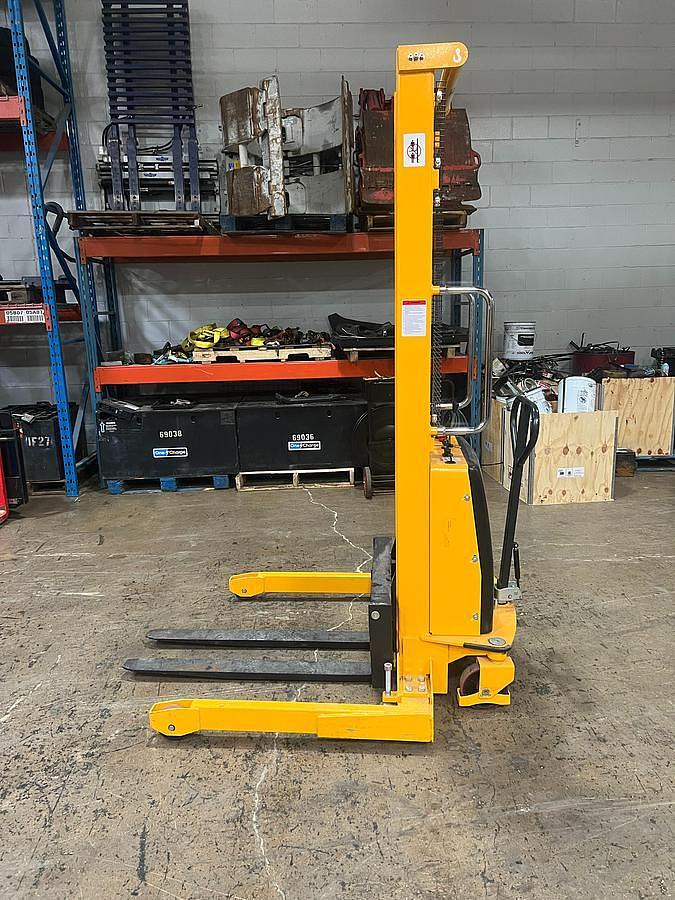
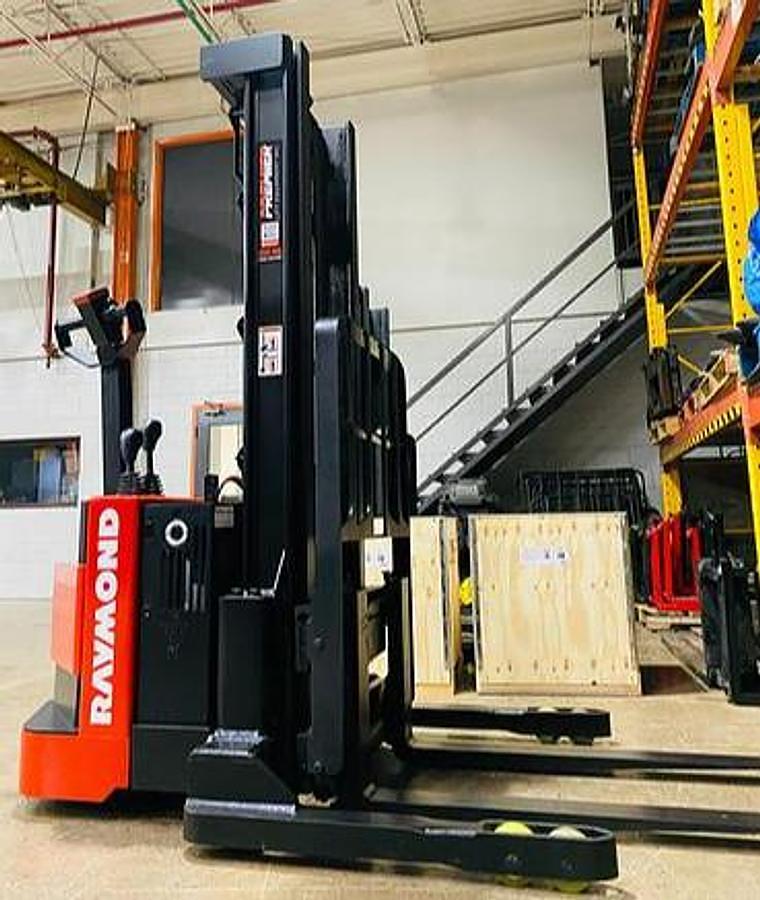
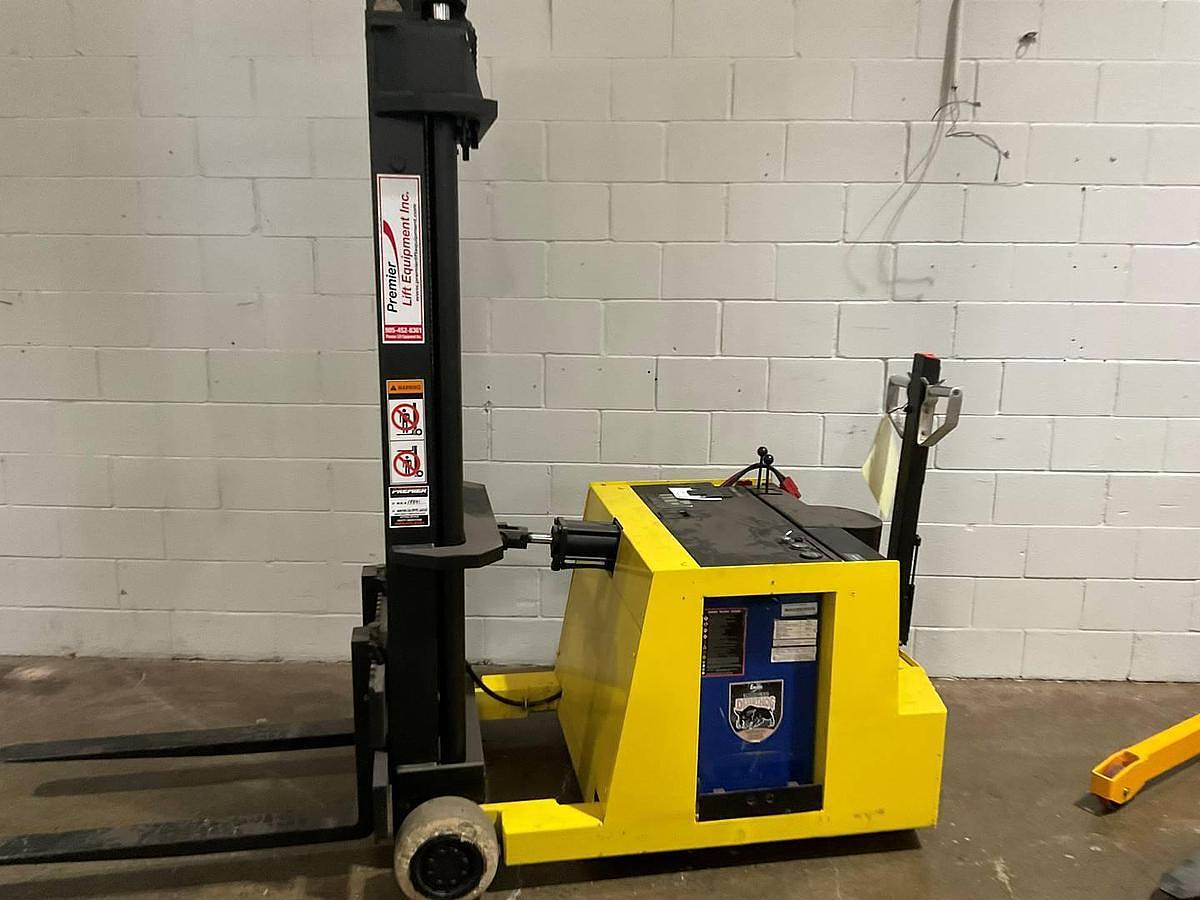
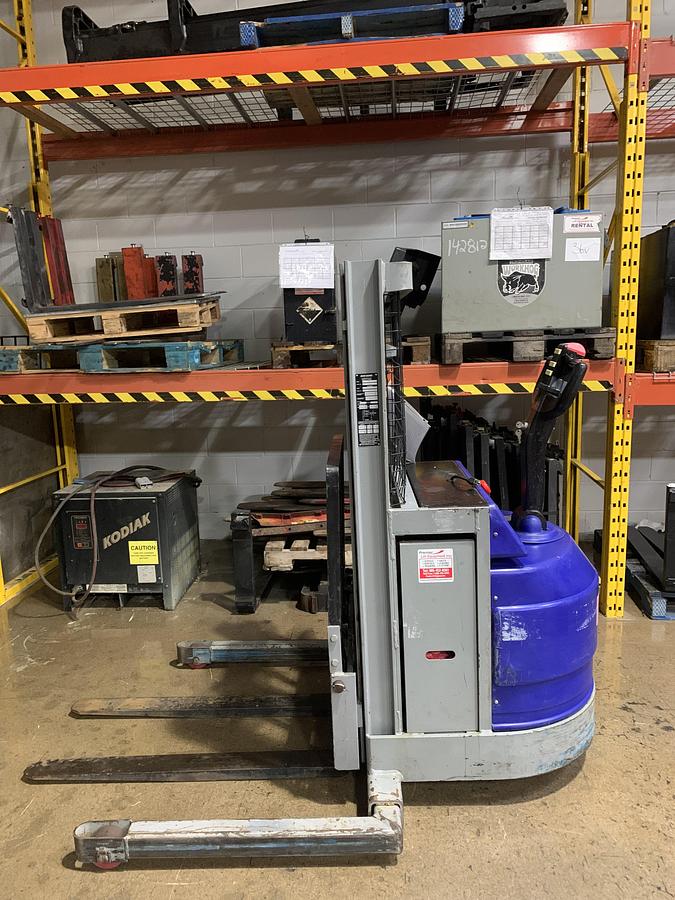
Electric Walkie Stackers – Fork‑Over, Straddle, Counterbalanced & Walkie‑Reach
Specifications
| Manufacturer | Premier |
| Condition | Refurbished |
| Part ID | 5951756 |
| Store Code | PLE1 |
| Classification | Category Page ( Not an Equipment Listing) |
| Capacity Range | 1500–4000 LBS. |
| Mast Spec | 96"–180" (high‑lift options available) |
| Category Overview Title | Electric Walkie Stackers – Vertical Lifting for Tight‑Aisle Operations |
| Category Overview Summary | Premier Lift Equipment supplies CSA‑ready electric walkie stackers across fork‑over, straddle, counterbalanced and walkie‑reach configurations for warehouse and industrial environments. |
| Category Overview | This page represents our full Electric Stacker category, including fork‑over, straddle, counterbalanced and walkie‑reach configurations. Use it to compare lift heights, base types and pallet compatibility across warehouse, manufacturing, 3PL and cold‑storage environments. CSA‑ready documentation packages are available for facilities requiring compliant walk‑behind lift equipment. |
| Frequently Asked Questions (FAQ) | What is an electric stacker? An electric stacker is a compact, walk‑behind lift truck designed for vertical pallet lifting, short‑distance transport, and precise maneuvering in tight warehouse aisles. They provide an emission‑free alternative to larger forklifts for indoor material‑handling tasks. What are the main types of electric stackers? Electric stackers come in four primary configurations: Fork‑Over Stackers — For open‑bottom pallets. Straddle Stackers — For closed‑bottom pallets using adjustable outrigger legs. Counterbalanced Stackers — For pallets that cannot be straddled; no outriggers required. Walkie‑Reach Stackers — Pantograph reach for one‑deep or two‑deep pallet placement. Where are electric stackers typically used? They are commonly used in warehousing, 3PL, retail, manufacturing, packaging, cold storage, and e‑commerce environments where tight‑aisle maneuverability and vertical storage efficiency are required. What lift heights and capacities are available? Typical electric stackers range from 1,500–4,000 lb with lift heights from 100″–192″+, depending on mast configuration and model. Can stackers handle standard pallets? Yes. Fork‑over models handle open‑bottom pallets, while straddle and counterbalanced models support closed‑bottom pallets and specialized load types. Are electric stackers suitable for narrow aisles? Yes. Electric stackers are engineered for tight spaces and can operate in aisles significantly narrower than those required for sit‑down forklifts. Are these units CSA‑certified? Yes. All electric stackers supplied by Premier Lift Equipment can be delivered CSA B335 compliant with full documentation for MOL and facility audits. Do stackers work in freezer environments? Many models can be configured with freezer‑rated electronics, hydraulic systems, and sealed components for cold‑storage operation. Do you offer service and parts support? Yes. Premier Lift Equipment provides full service, repairs, inspections, and parts support for all major electric stacker brands. |
| Supported Manufacturers | Raymond / Crown / Toyota / Hyster / Yale / Cat / Mitsubishi / UniCarriers / Clark / Hangcha / Linde / Hyundai / Doosan / Big Joe / Noblelift |
| * Fork Length | 36" / 42" / 48" |
| Base Types | Fork‑Over • Straddle • Counterbalanced |
| Reach Types (Walkie‑Reach Variants) | Pantograph • Single‑Reach |
| Operator Positions | Walk‑Behind • Flip‑Down Platform (select models) |
| Battery Voltage | 12V • 24V • 36V (model‑dependent) |
| Side‑Shifter | Optional (model‑dependent) |
| SUBCATEGORY INDEX | Electric Stackers include: |
| Fork‑Over Stackers | For open‑bottom pallets and compact storage. |
| Straddle Stackers | For closed‑bottom pallets with adjustable straddle legs. |
| Counterbalanced Stackers | For pallets that cannot be straddled; no outriggers required |
| Walkie‑Reach Stackers | Pantograph reach for one‑deep or two‑deep pallet placement. |
| High‑Lift Stackers | Lift heights up to 180" (300"+ on select reach models). |
| Freezer‑Rated Stackers | Sealed electronics and low‑temperature hydraulics for cold storage. |
| SAFETY STANDARDS & COMPLIANCE | All electric stackers in this category support CSA‑aligned safety and operational standards. Documentation and configuration options support: • CSA B335 industrial truck requirements • MOL pedestrian‑awareness protocols • Narrow‑aisle safety expectations • High‑lift stability guidelines • Freezer‑room operational requirements • Operator‑protection and ergonomic controls Available compliance accessories include: • Blue lights • Red‑zone lights • Audible alarms • Bilingual safety signage • Freezer‑rated components |
| COMPATIBILITY & USE CASES | Compatible Environments • Warehousing • 3PL and logistics • Retail and grocery • Manufacturing • Packaging • Cold storage • Shipping and receiving • E‑commerce fulfillment Common Use Cases • Vertical pallet stacking • Dock‑to‑rack transfers • Tight‑aisle maneuvering • Case‑picking replenishment • Light‑ to medium‑duty warehouse workflows • Closed‑bottom or open‑bottom pallet handling (model‑dependent) |
| FLEET DEPLOYMENT & INTEGRATION | Electric stackers can be deployed across single facilities or multi‑site operations with standardized configurations. Programs include: • Narrow‑aisle optimization • Multi‑shift battery and charger planning • Freezer‑rated stacker packages • Fleet‑wide walk‑behind equipment standardization • Seasonal warehouse‑capacity upgrades These solutions support consistent performance across mixed warehouse environments. |
| WHY THIS CATEGORY MATTERS | Electric stackers are essential for: • Tight‑aisle vertical lifting • Low‑cost indoor material handling • Emission‑free warehouse operation • Reducing forklift congestion • Improving warehouse throughput • Supporting CSA/MOL compliance They deliver measurable ROI through efficient vertical storage, reduced travel time, and improved operator control. |
| WHO THIS CATEGORY IS FOR | This category serves operations requiring compact, walk‑behind vertical lifting, including: • Warehousing • 3PL and logistics • Retail and grocery • Manufacturing • Packaging • Cold storage • E‑commerce fulfillment |
| RELATED CATEGORIES | • Electric Fork‑Over Stackers • Electric Walkie Straddle Stackers • Electric Counterbalanced Stackers • Walkie Reach Stackers • Electric Walkie Pallet Jacks • Electric Reach Trucks |
Description
2026 Walkie Stackers & Power-Lift Solutions | Ideal for Small Warehouses | Fully Reconditioned | CSA/MOL Certified | Budget-Friendly Fleet Options.
Electric stackers are compact, walk‑behind lift trucks engineered for vertical pallet lifting, short‑distance transport, and precise maneuverability in tight indoor warehouse environments. Premier Lift Equipment supplies CSA‑certified electric stackers across all major configurations — fork‑over, straddle, counterbalanced, and walkie‑reach — ensuring compatibility with every pallet type, aisle width, and storage layout.
With lift heights up to 180 inches, capacities from 1,500–4,000 lb, and 12V/24V/36V electric power, these stackers deliver smooth, emission‑free operation for warehousing, retail, 3PL, manufacturing, cold storage, and e‑commerce workflows. Optional features include side‑shift, power drive, flip‑down ride platforms, pantograph reach, and freezer‑rated packages.
Related Equipment Categories
Explore compatible walk‑behind and narrow‑aisle equipment:
Electric Fork‑Over Stackers – For open‑bottom pallets.
Electric Walkie Straddle Stackers – For closed‑bottom pallets.
Electric Counterbalanced Stackers – For pallets that cannot be straddled.
Walkie Reach Stackers – Pantograph reach for deeper pallet placement.
Electric Walkie Pallet Jacks – Low‑level pallet transport.
Chassis-Only Forklift Pricing | Transparent & Tailored
Battery & Charger Replacement Costs — Electric Walkie Stackers
Electric walkie stackers operate on 24V and 36V industrial battery systems, depending on manufacturer, lift height, and whether the unit is fork‑over or straddle. Replacement batteries typically cost $4,500–$7,500, and compatible chargers cost $1,500–$3,500. Any used electric walkie stacker priced under $10,000 will have a battery that is end‑of‑life or low‑capacity, and will require replacement to meet safe operational standards. Buyers should factor this into total cost planning when evaluating older walkie stacker units.
Battery Economics — What Electric Forklift Buyers Need to Know
Electric forklifts depend more on the battery and charger than any other component. Runtime, lift speed, and total cost of ownership all change based on workflow, charging habits, and battery condition.
Runtime isn’t fixed.
Light‑duty operations may achieve 6–8 hours, while high‑lift, dock‑loading, or cold‑storage environments can drop runtime to 3–5 hours. Your workflow determines your runtime — not the brochure.
Charger matching matters.
Incorrect chargers shorten battery lifespan, reduce runtime, cause voltage dropouts at height, and can void warranties. Premier Lift Equipment verifies charger compatibility on every electric forklift we supply.
Lead‑acid vs lithium.
Lead‑acid batteries are predictable and fully recyclable but require watering and proper charging discipline. Lithium batteries offer convenience and fast charging but carry higher replacement cost and disposal risk — especially if the manufacturer is no longer in business.
Battery cost vs chassis cost.
On older electric forklifts, the battery and charger often cost more than the forklift chassis. This is normal and expected in Budget and older CSA categories.
For deeper buyer education, read our full Battery Economics blog:The Hidden Costs Behind Electric Forklifts
FAQ — Electric Walkie Stacker Batteries & Power Systems
Q: Do electric walkie stackers include a healthy battery?
A: Only when priced appropriately. Electric stackers under $10,000 almost always have end‑of‑life batteries that require replacement.
Q: What does a proper battery and charger cost?
A: Industrial batteries typically cost $4,500–$7,500, and chargers range from $1,500–$3,500. Total replacement cost is usually $6,000–$11,000+ depending on voltage and capacity.
Q: Why is battery condition important for walkie stackers?
A: Walkie stackers rely on stable voltage for lift speed, travel speed, and predictable performance. Aging batteries cause voltage dropouts, reduced lift height, and inconsistent travel speed.
Q: Can I replace the battery later?
A: Yes. Replacement batteries and chargers can be added at any time, including high‑capacity or sealed options depending on runtime requirements.
Why Electric Walkie Stackers Support the Premier Ownership Framework
Operating compact electric stackers in high-density, narrow-aisle environments requires balancing specialized chassis design, battery lifecycle costs, and rigorous safety compliance. Whether managing fork-over, straddle, counterbalanced, or walkie-reach configurations, intelligent fleet planning means evaluating total cost of ownership—from high-cycle battery replacement to audit-ready CSA B335 documentation.
By pairing transparent chassis-only pricing with strict alignment to provincial safety standards, our electric stacker inventory protects your operating budget while eliminating compliance risks. Organizations seeking to maximize vertical storage ROI and operational safety can explore the integrated Premier Budget™ and Premier Certified™ frameworks.
Return Policy: Material‑handling equipment is sold as‑is with no returns accepted.
2026 Operational Compliance & Asset Verification All equipment listed by Premier Lift Equipment is verified for alignment with CSA B335:25 (National Standard of Canada) and MLITSD (Ontario Ministry of Labour) safety requirements. Whether you are operating in a 3PL warehouse, food-grade distribution, or heavy industrial site, this unit is processed through our 25-Point Asset Integrity Audit to ensure it is audit-ready for your next provincial safety blitz.
- Regional Compliance: Documentation provided for Ontario (GTA), broader Canada, and export-ready for US/Caribbean logistics.
- Green-Zone Readiness: Our electric inventory is evaluated for high-cycle efficiency and indoor air quality standards.
- Certified Support: Every listing is backed by our Brampton-based technical team, specializing in forklift certification, fleet maintenance, and long-term ROI strategy.
Ready to Optimize Your Narrow-Aisle Stacker Fleet?
Whether you are evaluating fork-over vs. straddle configurations, analyzing 24V/36V battery requirements, or planning a vertical storage upgrade, our team is here to help.
- Explore Inventory: View our current stock of Electric Fork-Over Stackers, Electric Walkie Straddle Stackers, Electric Counterbalanced Stackers, and Walkie Reach Stackers.
- Transparent Pricing: Review our Chassis-Only Pricing Model to control your power system costs.
- Get Expert Guidance: Contact our Brampton technical center or call our team directly to discuss your facility's specific capacity, mast, and compliance requirements.
Equipment Compliance & Quality
All electric stackers within this master category are supplied in alignment with CSA B335 safety standards and MOL compliance expectations. Documentation packages can include CSA/MOL inspection records, battery and charger compatibility details, freezer‑rated configuration information, and facility‑specific planning data for narrow‑aisle warehouse environments. Requirements may vary based on mast height, voltage class, base type (fork‑over, straddle, counterbalanced), and warehouse layout. Please confirm compliance and documentation needs with our team before deployment.