
Standards & Transparency — Forklift Classes & Power Types (2026 Compliance Guide)
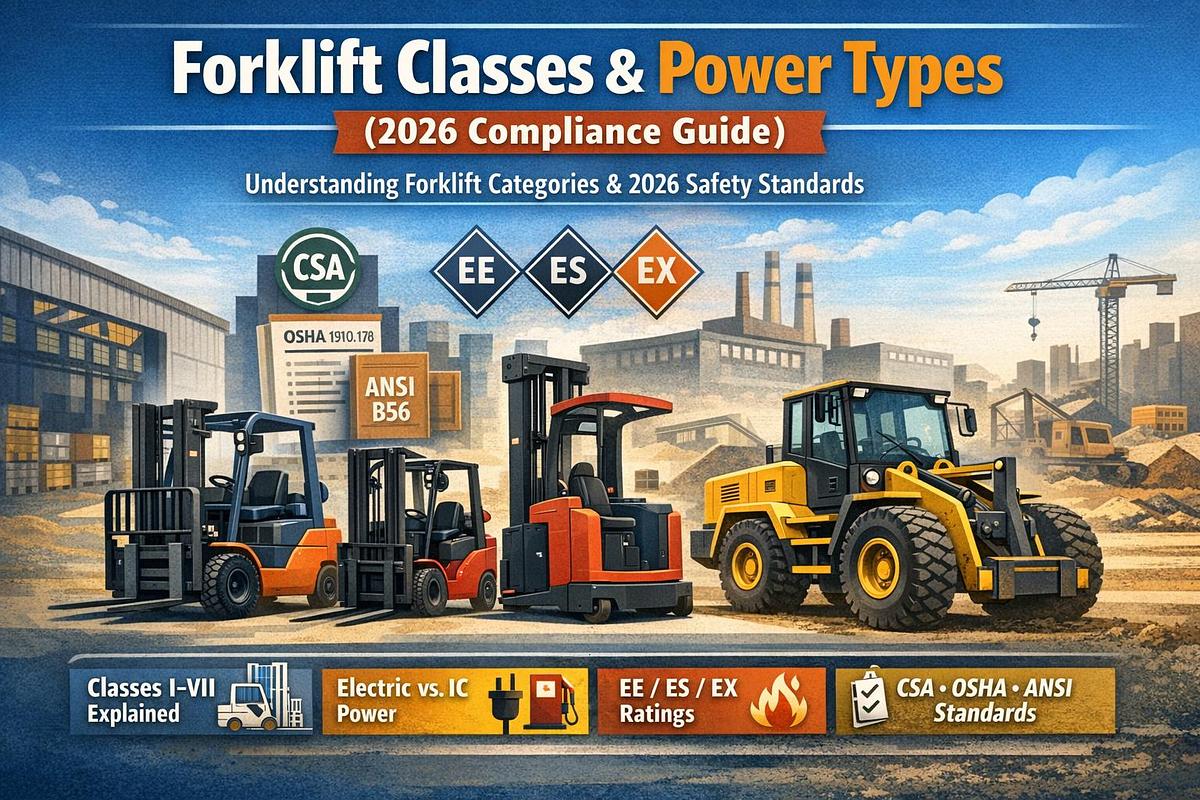
Specifications
| Manufacturer | Premier |
| Condition | Used |
| Part ID | 5951790 |
| Store Code | PLE1 |
| Compliance Topic | Forklift Classes I–VII and Power Types |
| Purpose of This Standard | Define how forklift classes and power systems are categorized, evaluated, and applied across industrial environments. |
| Where This Applies | Warehouses, distribution centers, manufacturing plants, cold storage, retail back‑of‑house, and outdoor yards. |
| Primary Risk Category | Medium to High, depending on class, power type, and operating environment. |
| CSA Standards Referenced | CSA B335:25 (Industrial Lift Truck Safety), CSA C22.1 (Electrical Code) |
| OSHA / ANSI References | OSHA 1910.178, ANSI/ITSDF B56 Series |
| Regulatory Notes | Class‑specific requirements apply to ventilation, hazardous locations, and battery/charging systems. |
| Inspection / Documentation Requirements | Daily operator checks, annual CSA‑aligned inspections, documented maintenance logs. |
| Relevant Forklift Classes (I–VII) | Class I — Electric Rider Class II — Narrow Aisle Class III — Walkies & Stackers Class IV — Cushion Tire IC Class V — Pneumatic Tire IC Class VI — Tow Tractors Class VII — Rough Terrain |
| Power Types Covered | Electric (24V/36V/48V/80V), LPG, Gasoline, Diesel |
| Hazardous Location Ratings | EE, ES, EX (as defined by CSA/UL) |
| Environmental / Facility Requirements | Ventilation, floor conditions, aisle width, turning radius, charging infrastructure. |
| Safe Operating Conditions | Adequate lighting, clear aisles, trained operators, documented pre‑shift inspections. |
| Prohibited Uses | Overloading, unapproved attachments, operation in hazardous zones without proper rating. |
| Required PPE | Safety shoes, high‑visibility apparel, gloves, hearing protection where required. |
| Operator Training Requirements | CSA/OSHA‑aligned lift truck certification, refresher training every 36 months |
| Related Standards Pages | Forklift Buying Standard 2026 • Transparency & Pricing Standard • EE/ES/EX Hazard Rating Guide |
| Related Blog Articles | • Understanding EE/ES/EX Ratings • 3‑Stage vs 2‑Stage Mast • Narrow Aisle Equipment Guide |
| Related Inventory Categories | Electric Forklifts (Class I) • Narrow Aisle Reach Trucks (Class II) • Walkies & Stackers (Class III) • Cushion Tire Forklifts (Class IV) • Pneumatic Tire Forklifts (Class V) |
| Supporting Documentation | CSA B335:25 excerpts, OEM spec sheets, inspection templates. |
Description
Forklift Classes & Power Types — 2026 Compliance Guide is part of Premier Lift Equipment’s Standards & Transparency framework.
This guide defines how forklift classes (I–VII) and power systems (Electric, LPG, Gasoline, Diesel) are evaluated, documented, and applied across industrial environments in alignment with CSA B335:25 and OSHA 1910.178.
What this guide covers:
• How each forklift class is defined and where it is used
• Differences between electric and internal combustion power systems
• Safety, ventilation, and facility requirements by class
• Hazardous location considerations (EE/ES/EX)
• Operator training and inspection expectations
• How to match the correct class to your facility and workload
Why this standard exists:
• To eliminate confusion around forklift classifications
• To support CSA/MOL inspections with clear, audit‑ready definitions
• To help buyers choose the correct equipment for their environment
• To align with how modern search and AI systems interpret equipment categories
• To provide a transparent, consistent reference across all OEMs
Related Standards & Resources
• View the Forklift Buying Standard 2026
• Explore our Compliance & Safety section
• Read our EE/ES/EX Rating Guide
• Browse CSA‑Ready Electric Forklifts
Disclaimer: This guide is provided for general informational purposes only.
Premier Lift Equipment does not provide legal advice and does not determine
facility‑specific compliance requirements. CSA, OSHA, ANSI, and MLITSD rules
may vary by jurisdiction, application, and operating environment.
Buyers and operators are responsible for ensuring their equipment, facility,
and training programs meet all applicable regulations and inspection standards.
Equipment Compliance & Quality
This Standards & Transparency page follows Premier Lift Equipment’s 2026 Compliance Framework.
All information presented here is aligned with CSA B335:25, MOL/MLITSD expectations, and industry-recognized safety practices.
Each standard is validated against real equipment, real refurbishment processes, and documented inspection criteria used across our fleet.
Quality and compliance are defined using:
• Verified OEM specifications and technical data
• CSA-aligned inspection and documentation requirements
• Premier’s 7‑Layer Refurbishment & Verification Model
• Hazard classification rules (EE/ES/EX where applicable)
• Operational and environmental suitability criteria
• Transparent, audit‑ready definitions for buyers and inspectors
This block ensures that every Standards & Transparency page maintains consistent terminology, structure, and compliance logic across all OEMs, power types, and forklift classes.