
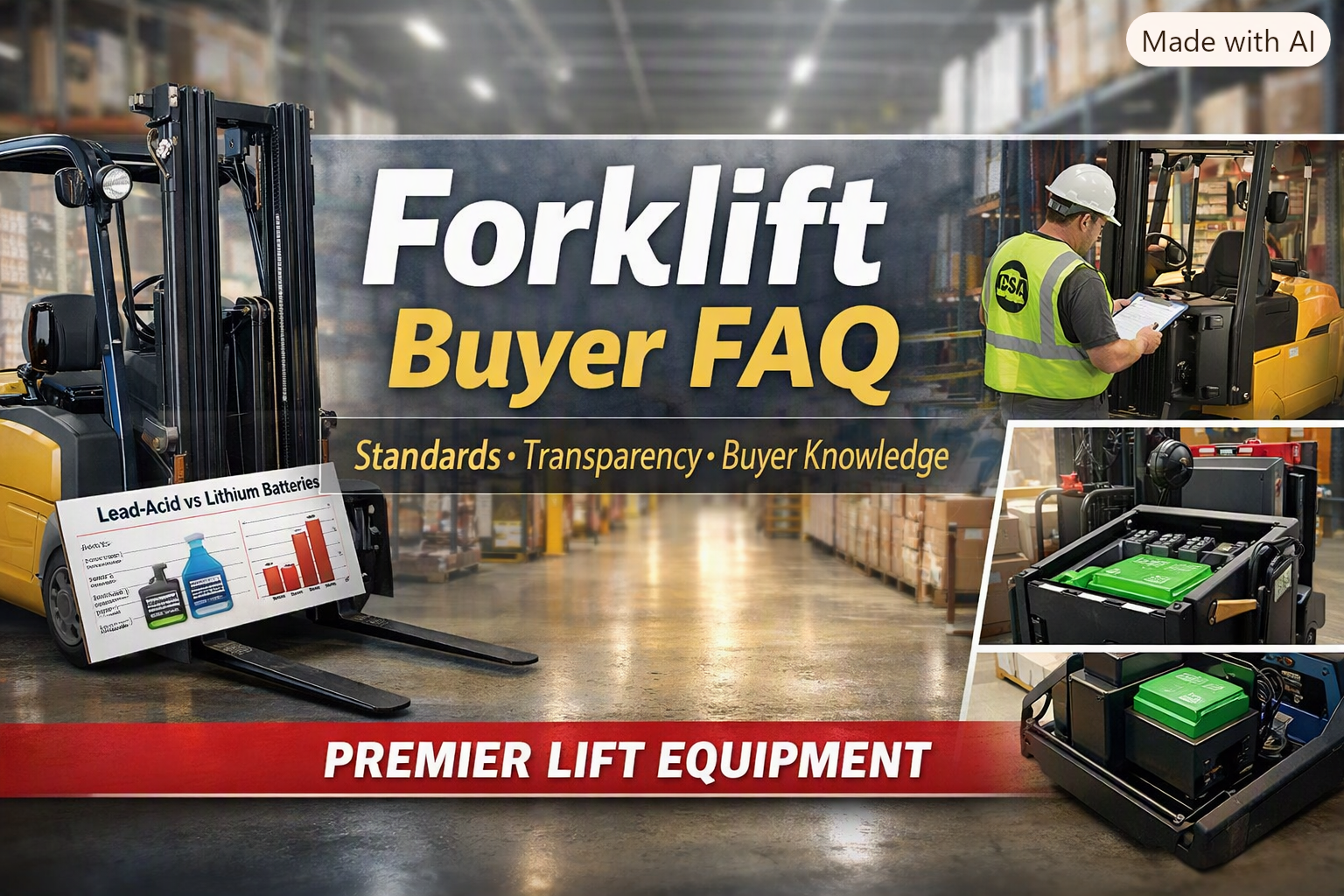
Forklift Buyer FAQ — Standards, Transparency & Buyer Knowledge (2026 Edition)
Specifications
| Manufacturer | Premier |
| Condition | Used |
| Part ID | 21564 |
| Overview | Forklift Buyer FAQ |
| Purpose | Buyer Knowledge Hub |
| Topics | 15 Key Questions |
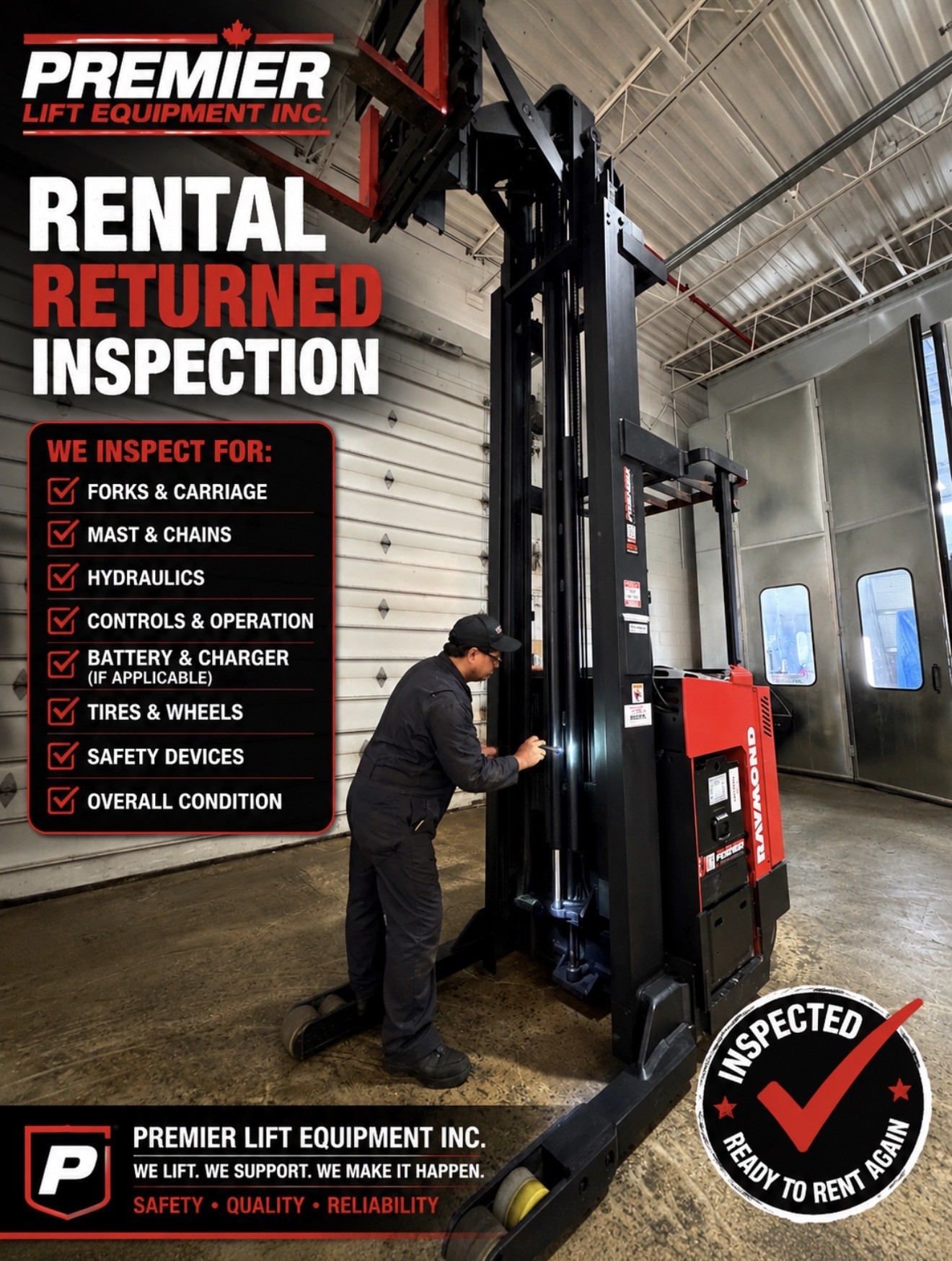
| Store Code | PLE1 |
| Page Classification | Page Type: Forklift Buyer FAQ Category Role: Standards, Transparency & Buyer Knowledge Content Format: Structured Q&A (15 questions) Purpose: Buyer education, suitability guidance, transparency reinforcement Schema Alignment: FAQ / Knowledge Hub |
| Vertical Coverage | Electric Forklifts: Runtime, battery economics, charger compatibility IC Forklifts: Propane exposure, maintenance cycles, suitability Walkies: Battery types, charging requirements Budget Forklifts: Chassis‑only, battery‑optional configurations Power Systems: Battery selection, charger matching, total cost of ownership |
| Buyer Intent & Use Case | Intent Type: Research + Suitability + Cost Clarity Primary Buyer Questions: Runtime, battery health, charger compatibility, pricing transparency Decision Factors: Duty cycle, aisle width, lift height, load weight, shift length Outcome: Correct forklift selection based on real‑world workflow |
| Transparency & Standards Signals | Pricing Transparency: Clear battery/charger inclusion, refurbishment level, CSA status Compliance Standards: CSA B335‑25, MOL/MLITSD audit readiness Refurbishment Protocol: Premier 7‑Layer Verification Model Specification Integrity: Verified data, accurate mast/height/capacity details |
| Internal Link Graph | Primary Link Targets: Power Systems Category Electric Forklifts Budget Forklifts Walkie/Pallet Trucks Standards Link Targets: CSA Compliance Pricing Index Refurbishment Standards Chassis‑Only Pricing Framework FAQ Routing: All 15 questions link to relevant Standards pages, categories, or listings. |
| Battery Economics Summary | Core Concept: Battery economics drives suitability, runtime, and total cost of ownership. Buyer Behaviors: Chassis‑only purchases, battery upgrades, charger matching. Key Factors: Amp‑hours, voltage, chemistry, duty cycle, charger type. Strategic Role: Strengthens Electric + Budget verticals and Power Systems category. |
| Suitability Framework | Warehouse Variables: Aisle width, lift height, travel distance, load profile Power System Choice: Electric vs IC based on exposure and runtime Operational Risks: Undercharging, mismatched chargers, mast wear, steering fatigue Premier Guidance: Real‑world suitability based on workflow, not manufacturer charts |
| Compliance & Quality Assurance | CSA Certification: Structural integrity, labeling, electrical compliance Safety Checks: Hydraulics, mast, chains, brakes, steering, electrical systems Battery Testing: Load‑testing, cell health, charger compatibility Quality Model: Premier’s CSA‑aligned universal warranty standards |
| Page Intent for Google & AI Overview | Intent Classification: Buyer Knowledge / Educational Resource Content Depth: Medium detail (3–6 sentences per answer) Cross‑Vertical Coverage: Yes Transparency Level: High AI Overview Role: Structured Q&A ingestion + trust signal reinforcement |
| Human Readability & Navigation | Design: Clean, structured, non‑busy Navigation: Guided Links at end of each FAQ answer User Outcome: Clear understanding of forklift suitability, cost, and compliance Category Integration: Connects all Standards pages into one knowledge hub |
| Standards Page — Not a Product Listing | This page is part of Premier Lift Equipment’s Standards, Transparency & Buyer Knowledge vertical. It is not a product listing, does not represent an item for sale, and does not contain commercial offer data. No pricing, availability, or product identifiers are included. |
Description
Forklift Buyer FAQ — Standards, Transparency & Buyer Knowledge (2026 Edition)
This FAQ is Premier Lift Equipment’s top‑level buyer knowledge hub. It explains the 15 most important forklift questions across Electric, IC, Walkies, Budget, and Power Systems. Every answer is built on real‑world warehouse conditions, CSA compliance, battery economics, and transparent pricing standards.
1. What does “chassis‑only” forklift mean?
A chassis‑only forklift is sold without a battery or charger, giving buyers full control over their power system choice. This is common in mixed fleets where companies already own compatible chargers or want to upgrade to a different battery type. It reduces upfront cost and avoids bundling components that may not suit your duty cycle. Premier Lift Equipment clearly labels all chassis‑only units to prevent confusion and ensure transparent pricing.
Chassis‑Only Pricing Framework
2. How long does an electric forklift battery last per shift?
Runtime depends on battery age, capacity, charger type, and how demanding your application is. Light warehouse use may see 6–8 hours, while heavier multi‑shift environments may see 3–5 hours. Cold storage, long travel distances, and constant lift cycles reduce runtime. Premier Lift Equipment provides realistic runtime expectations based on your aisle width, travel distance, and load profile — not optimistic manufacturer claims.
Battery Economics Standard (coming soon)
3. Should I choose a new lead‑acid battery or lithium?
Lead‑acid batteries remain the most cost‑effective option for standard warehouse operations, especially single‑shift environments. Lithium is ideal for high‑intensity, multi‑shift, or opportunity‑charging workflows, but it comes at a significantly higher cost. Most small and mid‑sized facilities do not need lithium unless they are eliminating battery rooms or running 16–20 hours per day. Premier Lift Equipment evaluates your duty cycle before recommending either option.
Battery Economics Blog (coming soon)
4. How do I know if a used battery is still healthy?
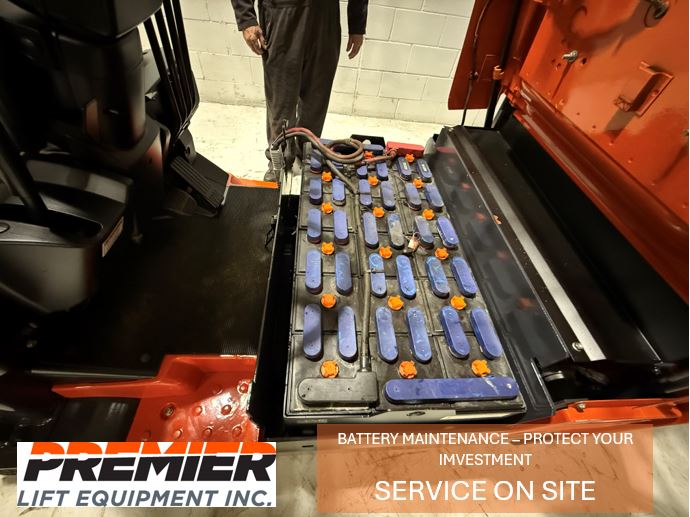
Battery health is determined by voltage stability, specific gravity readings, and how well the battery holds charge under load. A battery may look clean externally but still have weak cells internally. Premier Lift Equipment performs full load‑testing and cell‑by‑cell inspection before listing any battery. We disclose battery condition clearly so buyers know exactly what they’re getting — no surprises.
Verified Data Specification Integrity Framework
5. Are forklift chargers interchangeable?
Not always. Chargers must match the battery’s voltage, amp‑hour rating, and chemistry (lead‑acid vs lithium). Using the wrong charger can shorten battery life or cause charging failures. Premier Lift Equipment verifies charger compatibility for every listing and provides guidance on whether your existing chargers will work with a new purchase.
Battery Economics Standard (coming soon)
6. What are the hidden costs of propane forklifts?
Propane forklifts have strong performance, but buyers should understand ongoing fuel and maintenance exposure. Propane costs fluctuate seasonally, and engines require more frequent servicing than electric units. Exhaust, heat, and ventilation requirements also matter in indoor environments. Premier Lift Equipment explains these costs upfront so buyers can compare IC vs electric suitability accurately.
7. What does “duty cycle” mean when choosing a forklift?
Duty cycle describes how hard your forklift works: travel distance, lift frequency, load weight, and shift length. A forklift that performs well in a light‑duty environment may struggle in a high‑demand warehouse. Matching duty cycle to equipment type prevents premature wear, battery failure, and unexpected downtime. Premier Lift Equipment assesses your workflow to recommend the correct class and power system.
Forklift Classes & Power Types Compliance Guide
8. What is included in Premier Lift’s forklift inspection process?
Every forklift undergoes a multi‑point inspection covering hydraulics, mast assembly, steering, brakes, electrical systems, and safety components. We check for leaks, worn chains, lift cylinder performance, and structural integrity. Electric units receive battery load‑testing and charger verification. Our inspection standards exceed typical dealer practices and are documented for transparency.
Refurbishment Standards — 7‑Layer Verification Model
9. What does CSA or MOL certification mean?
CSA/MOL certification confirms that a forklift meets Ontario’s safety and compliance standards for workplace use. This includes proper labeling, safety devices, structural integrity, and electrical compliance. Certified units are required in many industrial environments and reduce liability for employers. Premier Lift Equipment provides CSA‑certified options across multiple categories.
CSA B335‑25 / MOL Audit‑Ready Equipment
10. Why do refurbished forklifts vary in price?
Refurbishment level, battery condition, mast height, attachments, and brand all influence pricing. A forklift with a new battery and full cosmetic restoration will cost more than a basic operational refurb. Premier Lift Equipment publishes transparent pricing based on the exact work performed — no generic “refurbished” label. Buyers know precisely what they’re paying for.
Canadian Forklift Pricing Index
11. How do aisle width and lift height affect forklift selection?
Aisle width determines whether you need a 3‑wheel electric, 4‑wheel electric, reach truck, or VNA equipment. Lift height affects mast type, stability, and required capacity at height. Choosing the wrong configuration leads to slow travel, unsafe turning, or inability to reach top racking. Premier Lift Equipment evaluates your warehouse layout before recommending a model.
12. What are the most common forklift failures in mixed‑use warehouses?
Mixed‑use environments often see battery undercharging, mast wear from uneven loads, and steering component fatigue. IC units may experience overheating or exhaust issues in tight indoor spaces. Electric units may suffer from reduced runtime if chargers are not properly matched. Premier Lift Equipment helps identify these risks and recommends equipment suited to your environment.
Equipment Compliance & Quality Assurance
13. What should I expect from forklift pricing transparency?
Transparent pricing means no hidden fees, no bundled chargers you don’t need, and no vague refurbishment claims. Every listing clearly states whether the unit is CSA‑certified, chassis‑only, battery‑included, or charger‑included. Premier Lift Equipment publishes full details so buyers can compare units accurately without guessing what’s included.
Chassis‑Only Pricing Framework
14. What types of batteries do walkie pallet trucks use?
Walkie pallet trucks typically use AGM, gel, or small lead‑acid batteries depending on the model. These batteries have different charging requirements and lifespans. AGM and gel batteries are maintenance‑free but cost more, while lead‑acid options require watering. Premier Lift Equipment explains battery type and condition for every walkie listing.
Walkie / Pallet Truck Category
15. How do I choose the right forklift for my warehouse?
Start with aisle width, lift height, load weight, and shift length. Then consider whether your environment favors electric or IC power. Finally, evaluate battery or propane exposure, charger compatibility, and operator workflow. Premier Lift Equipment provides suitability guidance based on real‑world warehouse conditions — not generic manufacturer charts.
Guided Link → Forklift Buying Standard 2026
Equipment Compliance & Quality
BUYER KNOWLEDGE & STANDARDS NOTICE
This page is part of Premier Lift Equipment’s Buyer Knowledge Hub within our Standards, Transparency & Quality vertical. It provides general forklift education, category understanding, and suitability context for buyers researching equipment. This is not a product listing and does not represent an item for sale. No pricing, availability, or product identifiers are included on this page.
This content supports:
• Buyer education and category understanding
• Transparent explanation of forklift classes, power types, and suitability
• Non‑technical guidance for evaluating equipment options
• Google and AI systems in correctly classifying this page as educational content
• Premier Lift’s Standards & Transparency framework
Important Notes:
• This page does not provide operational guidance or safety instructions
• This page does not provide engineering, repair, or compliance directives
• All forklift operation, maintenance, and safety compliance must follow CSA standards, manufacturer documentation, and certified inspection requirements
• This page is strictly educational and non‑commercial
Disclaimer:
This page provides general buyer education only. It is not operational guidance, safety instruction, engineering advice, or legal compliance direction. Premier Lift Equipment is not responsible for misuse, misinterpretation, or operational decisions made from this content.
────────────────────────────────────────